Why Comparing Term Insurance Policies is Important
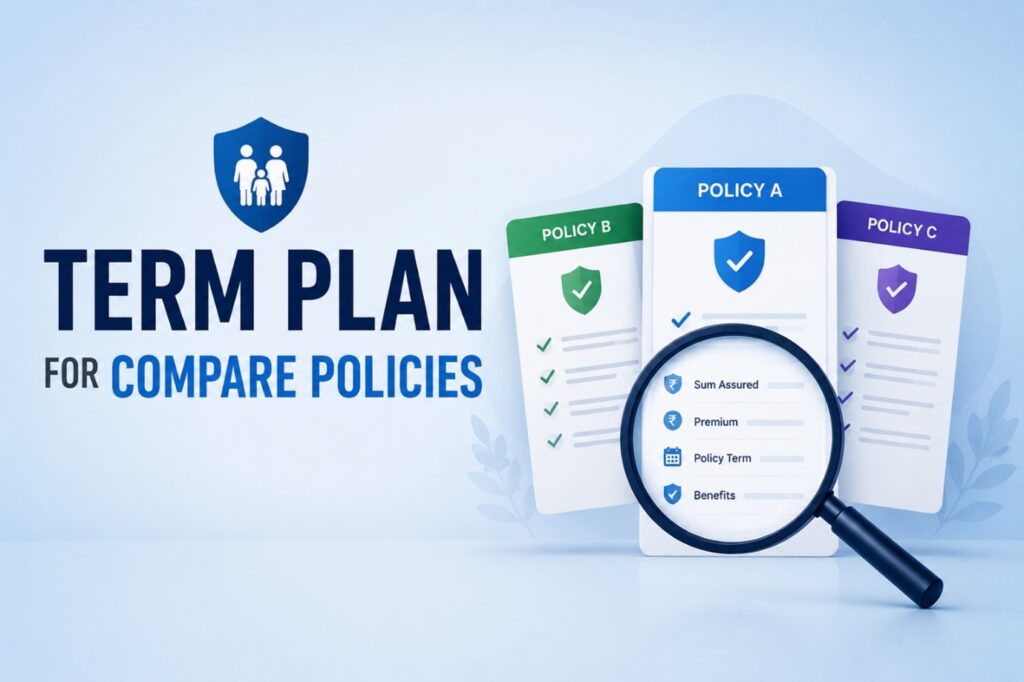
Comparing term insurance policies is one of the most important steps before making a purchase decision because not all plans offer the same benefits at the same cost. Different insurers provide varying levels of coverage, premium structures, claim settlement ratios, and additional riders, which can significantly impact the overall value of the policy. By comparing multiple term plans, individuals can identify which policy offers the best protection for their family within their budget.
Another key reason for comparison is transparency. Many policies may look similar on the surface, but small differences in terms and conditions, exclusions, or payout structures can change the actual benefit at the time of claim. A proper comparison helps in understanding these hidden differences clearly and avoids future financial stress.
Additionally, comparing policies allows buyers to balance affordability with long-term security. It ensures that you are not overpaying for limited coverage or missing out on better benefits available in the market. In simple terms, comparison helps you make an informed, confident, and financially smart decision while choosing the right term insurance plan.
Key Factors to Compare in Term Insurance Plans
Comparing term plans helps you choose the best protection by checking coverage, cost, and insurer reliability before buying a policy.
- Sum Assured (Coverage Amount)
It is the total payout your family receives in case of your death. Choose a sufficient amount to cover loans, expenses, and future financial needs. - Premium Amount and Affordability
This is the amount you pay regularly. It should be affordable so you can continue the policy for the full term without financial stress. - Claim Settlement Ratio of the Insurer
It shows how many claims the company has successfully paid. A higher ratio indicates better trust and reliability. - Policy Tenure and Flexibility
It is the duration of the policy. Choose a term that covers your income-earning years and major financial responsibilities. - Available Riders and Add-on Benefits
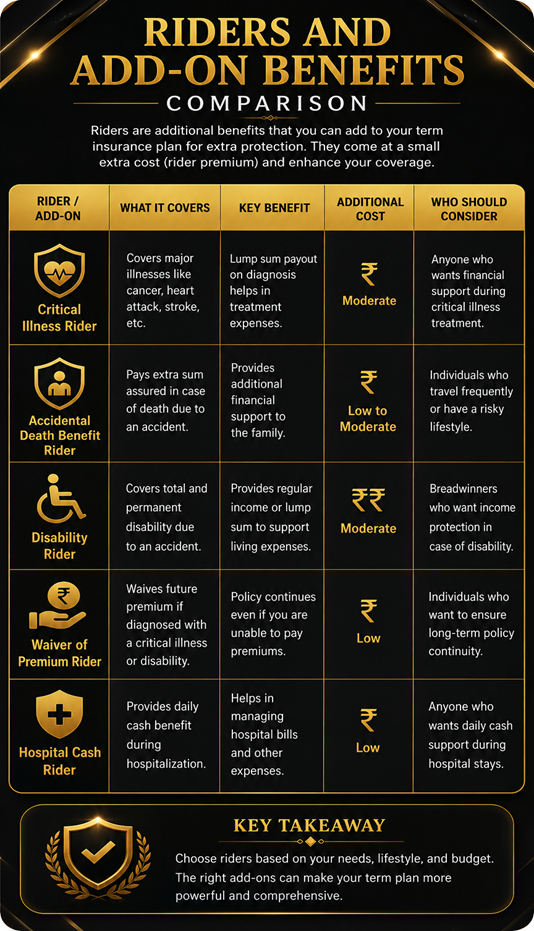
Extra benefits like critical illness or accidental cover increase protection at a small additional cost. - Policy Exclusions and Terms & Conditions
These are situations not covered under the policy. Understanding them helps avoid claim rejection surprises. - Premium Payment Options (Monthly, Yearly, etc.)
Different payment modes are available. Choose one that suits your income flow and budget planning. - Company Reputation and Financial Strength
A strong and trusted insurer ensures better service quality and long-term claim security. - Surrender Value and Return Features (if any)
Some plans offer partial value if you exit early, but most term plans do not have returns. - Customer Service and Claim Process Efficiency
Good customer support and a smooth claim process ensure hassle-free experience for your family during emergencies.
Premium vs Coverage: What to Focus On
When choosing a term insurance plan, the most important decision is balancing premium and coverage. Many people focus only on low premiums, but this can lead to insufficient financial protection. The real goal should be to ensure that the coverage amount (sum assured) is high enough to secure your family’s future while keeping the premium affordable in the long run.
A lower premium may look attractive initially, but if it comes with limited coverage, it may not fully support your family’s needs like loans, education, or daily expenses. On the other hand, a higher coverage plan with a slightly higher premium can provide stronger financial security and peace of mind.
The right approach is to evaluate your income, liabilities, and future responsibilities before deciding. Ideally, your coverage should be at least 10–15 times your annual income, ensuring that your family remains financially stable even in your absence. Choosing the right balance between premium and coverage helps you get maximum value from your term insurance plan.
Here is the content in table format
Premium vs Coverage: What to Focus On
| Aspect | What to Focus On | Explanation |
| Low Premium | Don’t choose only based on cost | Cheap plans may not provide enough financial protection for your family |
| High Coverage | Ensure sufficient sum assured | Coverage should be enough to handle loans, education, and living expenses |
| Balance | Focus on value, not just price | A slightly higher premium with strong coverage is a better choice |
| Income-Based Planning | Match coverage with income | Ideally 10–15 times your annual income for better security |
| Future Needs | Consider long-term responsibilities | Include children’s education, EMIs, and lifestyle needs |
| Policy Value | Look at overall benefit | Better to pay a bit more for stronger financial protection |
Claim Settlement Ratio and Its Role in Comparison
Claim Settlement Ratio (CSR) shows how many claims an insurer has paid compared to total claims received. A higher CSR means better reliability and higher chances of smooth claim approval. While comparing term plans, CSR helps you judge the trustworthiness of an insurance company. However, it should be considered along with premium, coverage, and policy features for a better decision.
Policy Term and Flexibility Options
Policy term refers to the duration for which your term insurance coverage remains active. Choosing the right term is important because it should ideally cover your income-earning years and major financial responsibilities like loans, children’s education, and retirement planning.
Flexibility options allow you to customize your policy according to changing needs. Some insurers offer features like increasing cover, extending policy term, or adjusting premium payment frequency. This flexibility ensures that your insurance plan can adapt to your life stages and financial goals, providing long-term security and convenience.
Online vs Offline Policy Comparison
Online term insurance policies are usually more affordable because they do not involve intermediaries like agents. They also allow easy comparison, quick purchase, and transparent information, making the process faster and more convenient for buyers.
On the other hand, offline policies are purchased through agents or branches, where you get personalized guidance and assistance. However, they may include higher costs due to commissions and can take more time to process.
While comparing, online policies are generally better for cost-effectiveness and transparency, whereas offline options are suitable for those who prefer personal support and detailed guidance before making a decision.
Common Mistakes While Comparing Term Plans
- Focusing Only on Low Premium
Choosing the cheapest plan may lead to low coverage and insufficient financial protection for your family. - Ignoring Claim Settlement Ratio
Not checking CSR can result in selecting an insurer with poor claim approval history. - Overlooking Policy Exclusions
Skipping terms and conditions may cause claim rejection in future due to unknown exclusions. - Not Considering Adequate Coverage
Low sum assured may not be enough to cover loans, expenses, and future needs. - Ignoring Riders and Add-ons
Missing additional benefits like critical illness or accidental cover reduces overall protection.
Final Takeaway: How to Make the Right Decision While Comparing Policies
Making the right decision while comparing term insurance policies requires a balanced approach rather than focusing on a single factor. The ideal policy should offer adequate coverage, affordable premiums, a strong claim settlement record, and useful add-on benefits that match your financial needs.
Instead of choosing the cheapest plan, focus on overall value and long-term protection. Evaluate how well the policy supports your family’s future expenses, debts, and lifestyle needs. Also, check the insurer’s reputation, policy flexibility, and exclusions to avoid future issues during claim settlement.
In the end, the best term insurance plan is one that fits your budget while ensuring complete financial security for your loved ones. A careful comparison helps you make a confident and informed decision that provides peace of mind for the future.