

What Makes a Health Insurance Plan One of the Best?
A health insurance plan is considered one of the best when it offers the right balance between comprehensive coverage, affordable premiums, reliable claim support, and long-term value. Instead of choosing a policy based only on its cost, it is important to evaluate the benefits and features that meet your healthcare needs.
The best health insurance plans provide coverage for hospitalization, day-care procedures, pre- and post-hospitalization expenses, emergency ambulance services, and modern medical treatments, as per the policy terms. They also offer access to a large network of cashless hospitals, allowing policyholders to receive treatment without paying the entire hospital bill upfront.
Another important factor is the insurer’s claim settlement process. A company with a strong claim settlement record, efficient customer support, and a simple claim procedure can make a significant difference during medical emergencies. Features such as lifetime renewability, No Claim Bonus (NCB), minimal co-payment, and optional add-on covers further enhance the value of a health insurance plan.
Ultimately, the best health insurance plan is one that matches your age, health condition, family size, budget, and future healthcare requirements while providing reliable financial protection against unexpected medical expenses.
Best Health Insurance Plans in India: A Complete Buying Guide
Choosing the best health insurance plan requires careful evaluation of your healthcare needs, budget, and the benefits offered by different insurers. Before purchasing a policy, consider the following factors to make an informed decision.
Understand Your Healthcare Needs
Assess your age, family size, medical history, and future healthcare requirements before selecting a health insurance plan.
Choose an Adequate Sum Insured
Select a sum insured that is sufficient to cover hospitalization, surgeries, and rising medical expenses.
Compare Policy Coverage
Check whether the plan covers hospitalization, day-care procedures, pre- and post-hospitalization expenses, modern treatments, and emergency ambulance services.
Review the Cashless Hospital Network
Choose an insurer with a large network of cashless hospitals to ensure convenient treatment during medical emergencies.
Check Waiting Periods
Understand the waiting period for pre-existing diseases, maternity benefits, and specific treatments before buying the policy.
Compare Premiums and Benefits
Do not choose a plan based only on the premium. Compare the coverage, exclusions, and overall benefits offered by different insurers.
Look for Lifetime Renewability
A policy with lifetime renewability ensures continuous health insurance coverage without age restrictions.
Evaluate the Claim Settlement Process
Choose an insurer with a strong claim settlement record, responsive customer support, and an easy claim process.
Consider Useful Add-On Covers
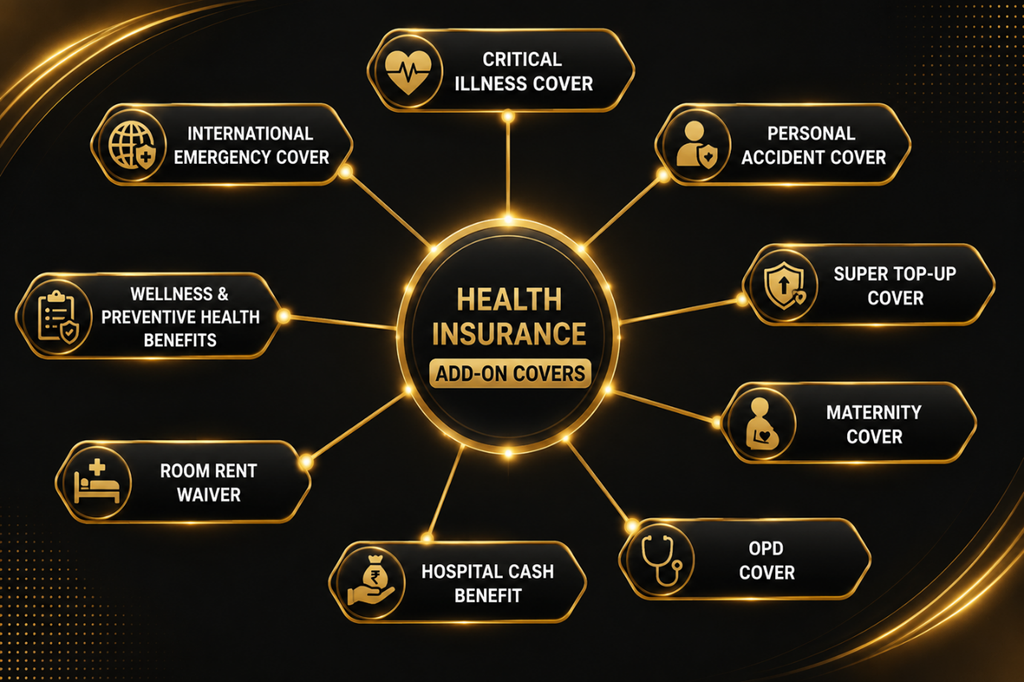
Enhance your protection with add-ons such as Critical Illness Cover, Personal Accident Cover, Super Top-Up Plans, or Maternity Cover if required.
Read the Policy Terms Carefully
Review the policy document to understand inclusions, exclusions, co-payment clauses, room rent limits, and other important conditions before making your final decision.
Selecting a health insurance plan after comparing these factors helps ensure comprehensive medical coverage, better financial protection, and peace of mind for you and your family.
Top Health Insurance Plans Compared: Features, Benefits & Coverage
Choosing the right health insurance plan requires comparing more than just the premium. Factors such as coverage, claim benefits, hospital network, waiting period, and additional features play an important role in selecting a plan that matches your healthcare needs.
| Insurance Company | Popular Health Plan | Key Features | Major Benefits | Ideal For |
| HDFC ERGO | Optima Secure | Secure Benefit, Restore Benefit, lifelong renewability | Higher effective coverage, cashless hospitalization | Individuals & Families |
| Niva Bupa | ReAssure 2.0 | Unlimited refill benefit, modern treatment cover | Refill of sum insured after claims, large hospital network | Families |
| Care Health Insurance | Care Supreme | No Claim Bonus, annual health check-up | Flexible coverage with optional add-ons | Families & Individuals |
| ICICI Lombard | Health AdvantEdge | Comprehensive hospitalization cover, cashless treatment | Wide hospital network and quality medical coverage | Working Professionals |
| Aditya Birla Health Insurance | Activ One Max | Wellness rewards, chronic care support | Encourages healthy lifestyle with wellness benefits | Health-conscious Individuals |
| Bajaj Allianz | Health Guard | Multiple sum insured options, lifelong renewability | Comprehensive protection with flexible plans | Individuals & Families |
| Manipal Cigna | ProHealth Prime | Customizable coverage, wellness program | Wide range of optional benefits and add-on covers | Families & Professionals |
Note: Plan features, premiums, waiting periods, and benefits may change over time and vary by policy variant. Always review the latest policy brochure and terms before making a purchase.
How to Compare Health Insurance Plans Before Buying
Choosing the right health insurance plan requires more than comparing premiums. Evaluating the coverage, benefits, and policy terms helps you select a plan that offers the best financial protection for your healthcare needs.
Assess Your Healthcare Requirements
Start by considering your age, family size, medical history, and expected healthcare needs. This will help you choose a plan that provides suitable coverage.
Compare the Sum Insured
Select a plan with a sum insured that is sufficient to cover hospitalization, surgeries, and rising medical expenses without exhausting your savings.
Review Policy Coverage
Compare the benefits offered by different plans, including hospitalization expenses, day-care procedures, pre- and post-hospitalization costs, emergency ambulance services, and modern treatments.
Check the Cashless Hospital Network
Choose an insurer with a wide network of cashless hospitals, especially those located near your home or workplace, for convenient access during emergencies.
Understand Waiting Periods
Review the waiting periods for pre-existing diseases, maternity benefits, and specific treatments, as these vary across insurance policies.
Compare Premiums Along with Benefits
A lower premium does not always mean better value. Compare the overall coverage, exclusions, and benefits offered to ensure you receive adequate protection.
Evaluate Claim Settlement Services
Choose an insurer with a strong claim settlement record, responsive customer support, and a simple claim process for a smoother experience during medical emergencies.
Check Optional Add-On Covers
Look for useful add-ons such as Critical Illness Cover, Personal Accident Cover, Maternity Cover, or Super Top-Up Plans if they match your healthcare requirements.
Read the Policy Terms Carefully
Before purchasing, carefully review the policy document to understand inclusions, exclusions, co-payment clauses, room rent limits, and other important conditions.
Comparing health insurance plans based on these factors helps you choose a policy that provides comprehensive coverage, reliable claim support, and long-term financial security for you and your family.
Which Health Insurance Company Offers the Best Value?
There is no single health insurance company that is the “best” for everyone. The right insurer depends on your healthcare needs, budget, family size, preferred hospitals, and the policy benefits you require. Instead of selecting a company based only on premium, compare factors such as coverage, claim settlement, network hospitals, waiting periods, and customer service.
Aap blog ke liye is type ka factual comparison table use kar sakte hain. CSR (Claim Settlement Ratio), Claim Settlement Speed aur Gross Written Premium (GWP) jaise metrics readers ko company compare karne me help karte hain.
Note: Figures below are based on publicly available FY 2024–26 industry data and may change in future regulatory updates. Always verify the latest IRDAI/company disclosures before making a purchase decision.
| Insurance Company | Claim Settlement Ratio | Complaints per 10,000 Claims | Gross Written Premium / Annual Business |
| HDFC ERGO Health | 97.61% | 8.87 | ₹6,596.53 Cr |
| Care Health | 95.45% | 42.67 | ₹8,404.67 Cr |
| Aditya Birla Health | 96.25% | 18.67 | ₹4,920.43 Cr* |
| Niva Bupa Health | 92.92% | 37.13 | ₹6,985.24 Cr |
| ICICI Lombard Health | 86.81% | 15.05 | ₹7,955.27 Cr |
| Manipal Cigna Health | 93.70% | 23.50 | ₹1,215 Cr* |
How to Use This Data While Choosing a Health Insurance Company
- Claim Settlement Ratio (CSR): A higher CSR indicates that the insurer settles a large percentage of claims received.
- Claim Settlement Speed: Faster claim settlement can be beneficial during medical emergencies.
- Gross Written Premium (GWP): A higher GWP often reflects a larger customer base and strong market presence, though it should not be the only deciding factor.
- Network Hospitals: Always check whether your preferred hospitals are part of the insurer’s cashless network.
- Policy Coverage: Compare inclusions, exclusions, waiting periods, room rent limits, and add-on covers before making a final decision.
The best-value health insurance company is not necessarily the one with the highest CSR or largest premium collection. It is the insurer that offers the right balance of comprehensive coverage, quick claim support, affordable premium, and a wide cashless hospital network according to your healthcare needs.
Health Insurance Premium Comparison: What Influences the Cost?
The premium of a health insurance policy is determined by several factors and can vary from one insurer to another. Understanding these factors helps you compare plans effectively and choose a policy that offers the right balance between affordability and comprehensive coverage.
Age of the Insured
Age is one of the biggest factors affecting premium costs. Younger individuals generally pay lower premiums, while premiums tend to increase with age due to higher health risks.
Sum Insured
A higher sum insured provides greater financial protection but usually results in a higher premium. Choose a coverage amount that matches your healthcare needs.
Medical History
Pre-existing diseases, chronic illnesses, or a history of major medical conditions may influence the premium and waiting periods, depending on the insurer’s underwriting guidelines.
Family Size
For family floater plans, the number of insured members and their ages can impact the overall premium.
Type of Health Insurance Plan
Individual, Family Floater, Senior Citizen, and Critical Illness plans have different premium structures based on the level of coverage they provide.
Policy Benefits
Plans offering additional features such as maternity benefits, wellness programs, OPD cover, or higher room rent eligibility generally have higher premiums.
Add-On Covers
Optional covers such as Critical Illness Cover, Personal Accident Cover, Super Top-Up Plans, or Maternity Cover increase the premium but also enhance overall protection.
Waiting Period and Co-payment
Plans with shorter waiting periods or lower co-payment requirements may have comparatively higher premiums than those with longer waiting periods or higher co-pay clauses.
Lifestyle and Health Profile
Factors such as smoking, obesity, or other health-related risks may affect premium calculations for certain health insurance plans.
Compare Before You Buy
When comparing health insurance premiums, do not focus only on the price. Evaluate the coverage, claim settlement record, cashless hospital network, waiting periods, exclusions, and policy benefits to ensure you receive the best value for your money. A well-balanced plan offers both affordable premiums and reliable financial protection during medical emergencies.
Essential Features of a High-Quality Health Insurance Plan
A high-quality health insurance plan should provide comprehensive medical coverage, financial security, and a smooth claim experience. Before purchasing a policy, evaluate the following essential features to ensure it meets your healthcare needs.
Comprehensive Hospitalization Cover
The policy should cover hospitalization expenses, surgeries, ICU charges, day-care procedures, and other eligible medical treatments.
Adequate Sum Insured
Choose a plan with a sufficient sum insured to manage rising healthcare costs and unexpected medical emergencies.
Cashless Hospital Network
A wide network of cashless hospitals allows you to receive treatment without paying the full hospital bill upfront, subject to policy terms.
Pre- & Post-Hospitalization Benefits
Look for plans that cover medical expenses incurred before and after hospitalization, including consultations, diagnostic tests, and prescribed medicines.
Coverage for Modern Treatments
A good policy should include coverage for advanced medical procedures and treatments, as specified in the policy.
Lifetime Renewability
Lifetime renewability ensures that you can continue your health insurance coverage without age-related restrictions.
No Claim Bonus (NCB)
Many insurers reward claim-free years by increasing the sum insured or offering additional benefits without significantly increasing the premium.
Minimal Co-payment and Sub-limits
Choose a plan with lower co-payment requirements and reasonable room rent or treatment limits to reduce out-of-pocket expenses.
Easy Claim Settlement Process
A reliable insurer should offer a simple claim process, responsive customer support, and efficient claim settlement services.
Optional Add-On Covers
Consider plans that offer add-ons such as Critical Illness Cover, Personal Accident Cover, Maternity Cover, OPD Cover, or Super Top-Up Plans to enhance your protection.
Selecting a health insurance plan with these essential features helps ensure comprehensive medical coverage, better financial security, and peace of mind for you and your family.
When and Why You Should Review or Upgrade Your Health Insurance Plan
A health insurance policy should not remain unchanged for years. As your age, family size, lifestyle, and healthcare needs evolve, your existing coverage may no longer provide adequate financial protection. Regularly reviewing your policy helps ensure it continues to meet your current medical and financial requirements.
Review Your Plan Every Year
An annual review helps you check whether your current coverage is still sufficient and whether your policy offers the benefits you need.
Upgrade After Major Life Events
Consider upgrading your health insurance after important milestones such as marriage, the birth of a child, or adding dependent parents to your policy.
Increase the Sum Insured
If medical treatment costs have increased or your family’s healthcare needs have grown, upgrading to a higher sum insured can provide better financial security.
Add Useful Riders
Enhance your policy with add-on covers such as Critical Illness Cover, Personal Accident Cover, Maternity Cover, or Super Top-Up Plans based on your changing requirements.
Compare New Plans
Health insurance products are updated regularly. Comparing newer plans may help you access better coverage, additional benefits, or a wider cashless hospital network.
Check Claim Experience
If you have experienced claim-related issues or poor customer service, it may be worth considering a policy that offers a smoother claim settlement process.
Keep Up with Healthcare Costs
Medical inflation continues to rise each year. Reviewing and upgrading your policy helps ensure your coverage remains adequate for future healthcare expenses.
Regularly reviewing your health insurance plan allows you to maintain comprehensive medical coverage, protect your finances, and ensure that your policy continues to support your family’s healthcare needs as they change over time.