What is Critical Illness Insurance and How Does It Work?
Critical Illness Insurance is a type of insurance cover that provides financial support when the insured person is diagnosed with a specified critical illness covered under the policy. Unlike regular health insurance, which mainly pays hospitalization and treatment expenses, critical illness insurance usually provides a lump-sum payout that can be used for medical costs, recovery expenses, or managing income loss.
What is Critical Illness Insurance?
Critical Illness Insurance protects individuals against the financial impact of serious health conditions such as cancer, heart attack, stroke, kidney failure, and other listed illnesses. The policy pays a fixed amount once the diagnosis meets the insurer’s terms and conditions.
How Does Critical Illness Insurance Work?
Choose a Suitable Coverage Amount
The policyholder selects the sum insured based on their healthcare needs, financial responsibilities, and risk factors.
Pay the Premium
The insured pays regular premiums to keep the policy active and maintain coverage.
Diagnosis of a Covered Illness
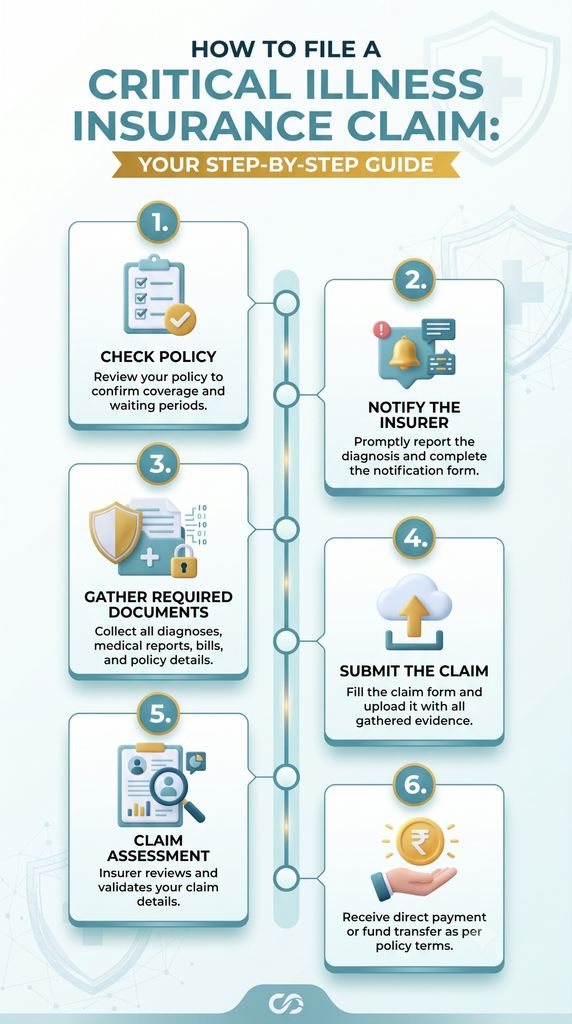
If the insured is diagnosed with a critical illness mentioned in the policy, they can raise a claim with the required medical documents.
Insurer Reviews the Claim
The insurance company verifies the diagnosis, medical reports, and policy conditions before approving the claim.
Receive Lump-Sum Benefit
Once the claim is approved, the insurer pays the insured amount, which can be used for:
- Medical treatment expenses
- Recovery and rehabilitation costs
- Daily living expenses
- Income replacement during recovery
- Other financial commitments
Why Critical Illness Cover Is Becoming Essential in India
With rising medical costs and an increase in lifestyle-related diseases, Critical Illness Cover has become an important part of financial protection. Unlike regular health insurance that mainly covers hospitalization expenses, critical illness insurance provides a lump-sum payout when the insured is diagnosed with a covered serious illness.
Rising Treatment Costs
Medical treatments for diseases like cancer, heart disease, stroke, and kidney failure can be expensive. A critical illness cover helps manage these high treatment costs and reduces the financial burden on individuals and families.
Increasing Lifestyle Diseases
Changes in lifestyle, stress, unhealthy eating habits, and sedentary routines have increased the risk of critical illnesses among people at younger ages. Having additional protection helps prepare for unexpected health challenges.
Provides Financial Support Beyond Medical Bills
A critical illness diagnosis may lead to loss of income, long-term recovery, or additional expenses. The lump-sum benefit from the policy can be used for treatment costs, household expenses, loan payments, or recovery needs.
Protects Savings and Investments
Major illnesses can affect long-term financial goals by forcing individuals to use their savings. Critical illness cover helps protect existing investments and emergency funds during difficult times.
Useful for Working Professionals
For earning individuals, a serious illness can impact their ability to continue working. Critical illness insurance provides financial support during the recovery period and helps maintain financial stability.
Additional Protection Alongside Health Insurance
A regular health insurance plan covers eligible hospitalization expenses, while critical illness cover provides a fixed payout after diagnosis of a covered disease. Both policies work together to provide broader financial protection.
Helps Manage Future Healthcare Risks
With increasing healthcare expenses and changing health risks, critical illness cover acts as a safety net that prepares individuals and families for major medical emergencies.
Choosing a suitable critical illness cover based on age, health condition, coverage amount, and policy terms can help ensure better financial security against unexpected health challenges.
Top Critical Illness Insurance Plans in India: Complete Comparison
Critical Illness Insurance provides financial protection against major life-threatening diseases by offering a lump-sum payout after the diagnosis of a covered illness. Unlike regular health insurance, which mainly covers hospitalization expenses, a critical illness policy helps manage treatment costs, loss of income, and other financial responsibilities during recovery.
When comparing critical illness insurance plans in India, it is important to evaluate coverage, benefits, claim process, premium, and policy conditions rather than choosing a plan only based on cost.
Comparison of Popular Critical Illness Insurance Plans in India
| Insurance Company | Key Features | Suitable For |
| HDFC ERGO Critical Illness Cover | Wide coverage options, flexible sum insured, strong health insurance network | Individuals looking for comprehensive protection |
| ICICI Lombard Critical Illness Cover | Coverage for major illnesses, easy digital services, multiple plan options | Working professionals and families |
| Niva Bupa Critical Illness Cover | Higher coverage options, simple policy structure, health-focused benefits | Individuals seeking higher financial protection |
| Care Health Critical Illness Cover | Covers several critical diseases with flexible benefits | Families and individuals requiring extensive coverage |
| Aditya Birla Health Critical Illness Cover | Wellness benefits, health management features, disease coverage options | Health-conscious individuals |
| Bajaj Allianz Critical Illness Cover | Comprehensive benefits and additional protection options | Individuals seeking affordable coverage |
How to Select the Right Critical Illness Insurance Plan?
The best critical illness insurance plan depends on your age, health condition, family medical history, income, and financial responsibilities. A suitable plan should offer adequate coverage, affordable premiums, and reliable claim support.
Critical illness insurance acts as an additional financial safety net that helps protect your savings and family finances when facing serious health challenges. Before purchasing, always compare multiple plans and review policy terms carefully to choose the right protection.
How to Compare Critical Illness Insurance Plans Before Buying
A Critical Illness Insurance Plan provides financial support when the insured is diagnosed with a serious illness covered under the policy. Since different insurers offer different benefits, coverage limits, and conditions, comparing plans carefully before buying helps you select the right protection for your healthcare and financial needs.
Important Factors to Compare
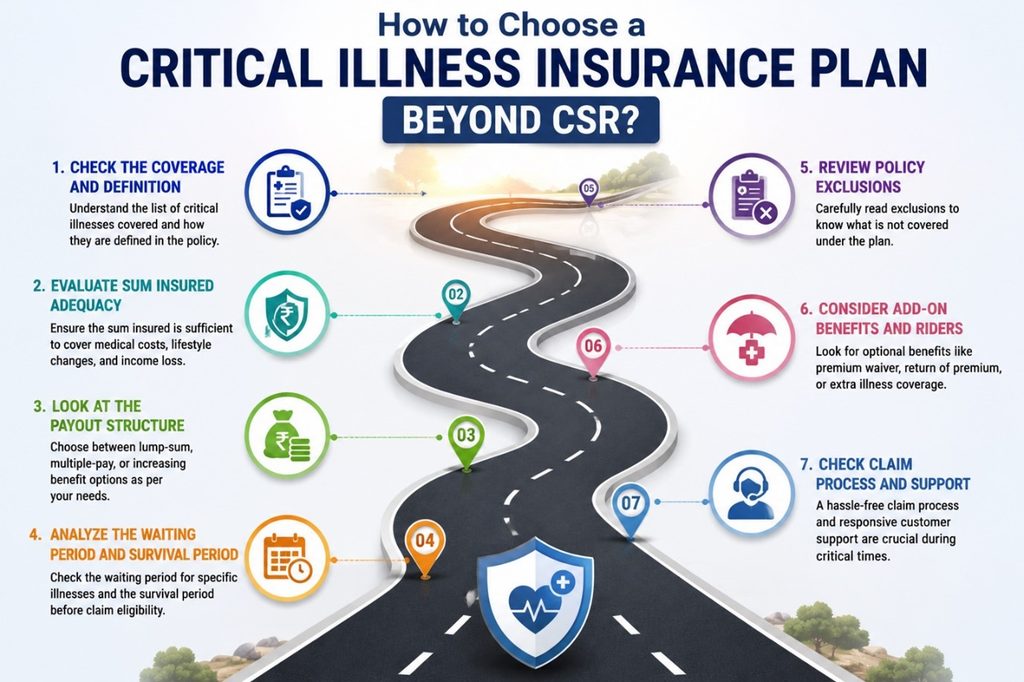
Check the List of Covered Critical Illnesses
Compare the number and type of illnesses covered by different plans, such as cancer, heart attack, stroke, kidney failure, and other major diseases. Ensure the illnesses important to you are included.
Compare Sum Insured Options
Choose a sum insured that can support medical treatment costs, recovery expenses, and possible income loss during the illness period.
Review Premium Costs
Compare premiums across insurers, but do not select a plan only because it is cheaper. Evaluate the benefits, coverage, and policy conditions offered.
Understand Waiting Period
Check the initial waiting period and survival period requirements before purchasing a plan, as these conditions may differ between insurers.
Check Claim Process and Settlement Support
Choose an insurer with a simple claim process, good customer support, and a reliable claim settlement record for smoother assistance during emergencies.
Review Policy Exclusions
Carefully understand what is not covered, including pre-existing conditions, specific illness exclusions, and other limitations mentioned in the policy document.
Compare Payout Benefits
Most critical illness plans provide a lump-sum payout after diagnosis of a covered illness. Compare how and when the benefit is paid under different policies.
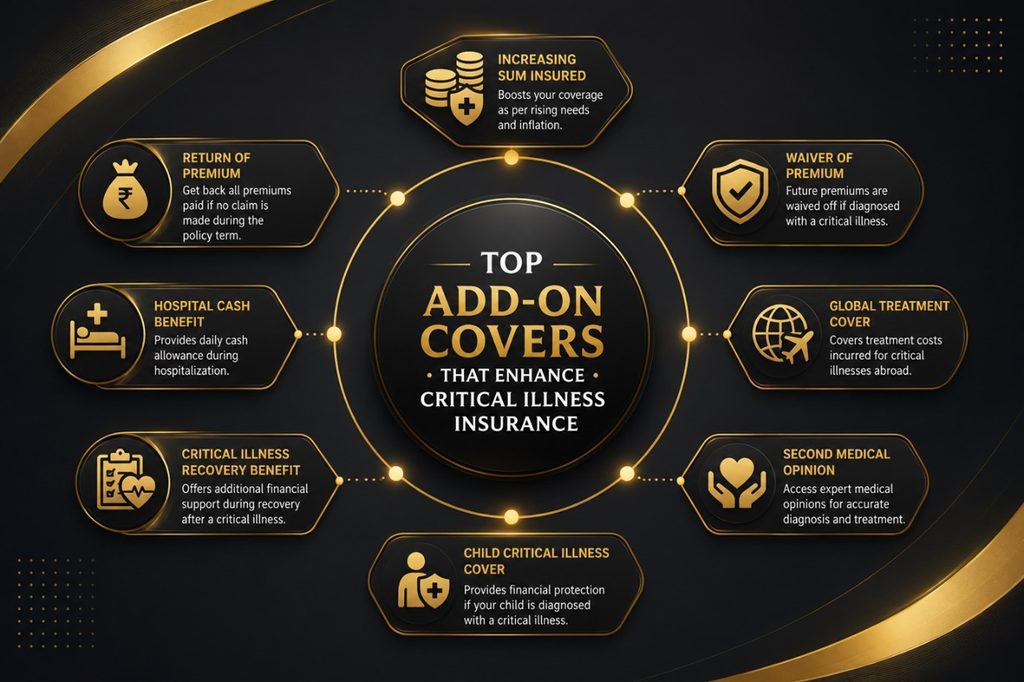
Look for Additional Benefits
Some plans may offer extra benefits such as health check-ups, wellness programs, or premium waiver options depending on the policy features.
Consider Your Age and Health Profile
Your age, lifestyle, family medical history, and existing health conditions can influence the suitable coverage amount and premium.
Final Thoughts
Comparing critical illness insurance plans based on coverage, premium, waiting period, claim process, exclusions, and benefits helps you choose a policy that provides meaningful financial protection. The right plan can help manage treatment costs and protect your savings during a serious health crisis.
Critical Illness Insurance Rankings Based on Claim Settlement Ratio
Choosing a Critical Illness Insurance Plan requires evaluating various factors, and the Claim Settlement Ratio (CSR) is one of the important indicators to consider. A higher claim settlement ratio shows that an insurer has settled a large number of claims received during a financial year. However, CSR should be considered along with coverage benefits, policy terms, waiting periods, and claim service quality.
Critical Illness Insurance Companies Based on Claim Settlement Ratio
| Insurance Company | Claim Settlement Ratio (CSR) | Key Highlights |
| HDFC ERGO Health Insurance | 97%+ | Strong claim support, comprehensive health plans, and wide coverage options. |
| Aditya Birla Health Insurance | 96%+ | Offers wellness benefits, critical illness options, and health-focused solutions. |
| Care Health Insurance | 95%+ | Provides multiple health plans with critical illness and family coverage options. |
| ICICI Lombard Health Insurance | 95%+ | Known for digital claim services and flexible health insurance solutions. |
| Bajaj Allianz Health Insurance | 95%+ | Offers a range of health protection plans with additional benefits. |
| Niva Bupa Health Insurance | 92%+ | Focuses on comprehensive health coverage and customer-friendly health plans. |
(CSR figures may vary every year based on regulatory filings and company disclosures.)
A high Claim Settlement Ratio can be a helpful factor while comparing critical illness insurance providers, but the final decision should be based on coverage, affordability, policy features, and the insurer’s ability to support you during a medical emergency.
Critical Illness Plans Compared by Coverage, Benefits & Premium
Choosing the right Critical Illness Plan requires comparing more than just the premium. Different insurers offer varying levels of coverage, benefits, waiting periods, and payout structures. Evaluating these factors helps you select a plan that provides the best financial protection against serious illnesses.
Comparison of Popular Critical Illness Plans
| Insurance Company | Coverage Highlights | Key Benefits | Premium Level |
| HDFC ERGO | Covers a wide range of critical illnesses | Lump-sum payout, lifelong renewability, cashless network | Moderate |
| Care Health Insurance | Comprehensive critical illness coverage | Multiple illness options, high sum insured, easy claim process | Moderate |
| Niva Bupa Health Insurance | Extensive illness coverage | Lump-sum benefit, flexible coverage options | Moderate to High |
| ICICI Lombard | Covers major life-threatening diseases | Quick claim process, optional add-ons | Moderate |
| Aditya Birla Health Insurance | Critical illness with wellness benefits | Health management programs and reward benefits | Moderate |
| Star Health Insurance | Comprehensive illness protection | Suitable for individuals and senior citizens | Moderate |
| Tata AIG Health Insurance | Broad coverage for serious illnesses | High coverage limits and global treatment options (selected plans) | Moderate to High |
| Bajaj Allianz | Covers major critical illnesses | Flexible policy options and cashless treatment | Moderate |
Which Plan Offers the Best Value?
The best critical illness plan is not necessarily the one with the lowest premium. It is the plan that offers comprehensive illness coverage, an adequate sum insured, reasonable waiting periods, reliable claim support, and benefits that match your healthcare and financial needs. Comparing these factors before purchasing helps ensure long-term financial security in the event of a serious medical condition.
What Diseases Are Covered Under Critical Illness Insurance?
Critical Illness Insurance provides a lump-sum payout when the insured is diagnosed with a covered critical illness, subject to the policy’s terms and conditions. The benefit can be used for medical treatment, recovery, household expenses, or income replacement. The list of covered diseases varies by insurer, so it is important to review the policy document before purchasing.
Common Diseases Covered Under Critical Illness Insurance
Cancer
Most policies cover specified stages of cancer, subject to the insurer’s definitions and policy conditions.
Heart Attack
Coverage is generally available for heart attacks that meet the medical criteria defined in the policy.
Stroke
Many critical illness plans cover strokes that result in permanent neurological damage, as specified in the policy.
Kidney Failure
Permanent kidney failure requiring regular dialysis or a kidney transplant is commonly covered.
Major Organ Transplant
Coverage is usually available for major organ transplants such as the heart, liver, lungs, pancreas, or kidney.
Coronary Artery Bypass Surgery (CABG)
Most insurers cover coronary artery bypass graft surgery when medically necessary.
Paralysis
Permanent paralysis of limbs caused by illness or injury may be covered, depending on policy terms.
Multiple Sclerosis
Some plans provide benefits if the insured is diagnosed with multiple sclerosis that leads to permanent disability.
Parkinson’s Disease
Advanced stages of Parkinson’s disease may be covered under selected critical illness policies.
Coma
A prolonged coma resulting in permanent neurological impairment may qualify for benefits under the policy.
Aortic Surgery
Certain policies cover surgery performed to repair or replace the aorta due to a covered medical condition.
Benign Brain Tumor
Some insurers cover non-cancerous brain tumors that require surgical treatment or cause permanent neurological damage.
Important Points to Remember
- The list of covered diseases differs from one insurer to another.
- Each illness must meet the medical definition mentioned in the policy.
- Waiting periods and survival periods may apply before benefits become payable.
- Always read the policy wording to understand inclusions, exclusions, and claim conditions.
A Critical Illness Insurance Plan provides valuable financial support during serious medical conditions, helping you focus on recovery without worrying about the financial burden of treatment and related expenses.
Key Features to Look for in a Critical Illness Insurance Plan
A Critical Illness Insurance Plan offers financial support when you are diagnosed with a covered serious illness. Before purchasing a policy, it is important to compare its features to ensure it provides adequate protection for your healthcare and financial needs.
Coverage for Multiple Critical Illnesses
Choose a plan that covers a wide range of major illnesses such as cancer, heart attack, stroke, kidney failure, and major organ transplant, as specified in the policy.
Adequate Sum Insured
Select a sum insured that can cover treatment costs, recovery expenses, and loss of income during your recovery period.
Lump-Sum Benefit
A good policy should provide a lump-sum payout upon diagnosis of a covered critical illness, allowing you to use the amount as needed.
Short Waiting Period
Compare waiting periods across insurers and choose a plan with a reasonable waiting period before benefits become available.
Survival Period
Check the survival period requirement, as some policies require the insured to survive for a specified number of days after diagnosis before the claim is paid.
Lifetime Renewability
A policy with lifetime renewability ensures continuous coverage even as you grow older.
Flexible Premium Options
Look for plans that offer affordable premiums while providing comprehensive coverage and valuable benefits.
Easy Claim Settlement Process
Choose an insurer with a strong claim settlement record, transparent procedures, and responsive customer support.
Additional Benefits
Some plans include valuable features such as second medical opinions, wellness programs, health check-ups, or optional riders that enhance overall protection.
Clear Policy Terms and Exclusions
Read the policy wording carefully to understand covered illnesses, exclusions, waiting periods, claim conditions, and benefit limits before purchasing.
Choosing a Critical Illness Insurance Plan after comparing these key features helps ensure better financial protection and peace of mind when facing serious medical conditions.
How to Choose the Right Sum Insured for Critical Illness Cover
Choosing the right sum insured is one of the most important decisions when buying a Critical Illness Insurance Plan. The coverage amount should be sufficient to handle expensive treatments, recovery costs, and any temporary loss of income without affecting your financial stability.
Consider Your Medical Expenses
Estimate the cost of treating major illnesses such as cancer, heart disease, kidney failure, or organ transplant, as these treatments can be expensive.
Evaluate Your Income
Choose a sum insured that can support your family’s financial needs if you are unable to work during treatment and recovery.
Consider Your Family Responsibilities
If you have dependents, home loans, or other financial commitments, opt for a higher sum insured to ensure your family’s financial security.
Factor in Medical Inflation
Healthcare costs continue to rise every year. Selecting a higher coverage amount can help protect you from increasing treatment expenses in the future.
Review Your Existing Health Insurance
If you already have a comprehensive health insurance policy, choose a critical illness cover that complements your existing coverage rather than duplicating it.
Assess Your Lifestyle and Health Risks
Individuals with high-stress jobs, unhealthy lifestyles, or a family history of serious illnesses may benefit from a higher sum insured.
Compare Different Coverage Options
Compare plans offered by multiple insurers based on the sum insured, covered illnesses, waiting period, premium, and policy benefits.
Balance Coverage with Premium
While higher coverage generally means a higher premium, choose a plan that offers adequate financial protection without exceeding your budget.
Review Your Coverage Regularly
As your income, family responsibilities, and healthcare needs change, review your critical illness cover and increase the sum insured whenever necessary.
Selecting the right sum insured ensures that you have adequate financial support to manage treatment expenses, maintain your lifestyle, and protect your family’s financial future in the event of a serious illness.
Common Exclusions in Critical Illness Insurance Policies
A Critical Illness Insurance Policy provides financial protection against specified serious illnesses. However, not every medical condition or situation is covered. Understanding the common exclusions helps you avoid claim rejections and choose the right policy.
| Exclusion | Explanation |
| Pre-Existing Diseases | Critical illnesses arising from pre-existing conditions may not be covered during the waiting period or as per policy terms. |
| Waiting Period Claims | Illnesses diagnosed during the initial waiting period are generally not covered. |
| Survival Period Not Met | Many policies require the insured to survive for a specified number of days after diagnosis before the benefit becomes payable. |
| Illnesses Not Listed in the Policy | Only the critical illnesses specifically mentioned in the policy are covered. |
| Early-Stage Medical Conditions | Early-stage or less severe forms of certain diseases may not qualify for benefits if they do not meet the insurer’s definition. |
| Self-Inflicted Injuries | Illnesses or injuries resulting from intentional self-harm are generally excluded. |
| Alcohol or Drug Abuse | Medical conditions caused by excessive alcohol consumption or illegal drug use are usually not covered. |
| Cosmetic or Elective Procedures | Treatments that are cosmetic or not medically necessary are generally excluded. |
| Non-Disclosure of Medical Information | Failure to disclose relevant medical history or incorrect information at the time of purchase may lead to claim rejection. |
| Excluded Medical Conditions | Certain illnesses or medical conditions specifically excluded by the insurer will not be covered. |
Understanding these exclusions helps you choose a Critical Illness Insurance Policy with realistic expectations and ensures a smoother claim experience when you need financial support the most.
When Should You Review or Upgrade Your Critical Illness Insurance Plan?
A Critical Illness Insurance Plan should be reviewed regularly to ensure it continues to provide adequate financial protection against rising medical costs and changing healthcare needs. As your personal and financial circumstances change, your existing coverage may no longer be sufficient. Reviewing and upgrading your policy at the right time helps maintain comprehensive protection.
Review Your Policy Every Year
Conduct an annual review to ensure your policy still meets your healthcare needs, financial goals, and current lifestyle.
After a Major Life Event
Consider upgrading your plan after important milestones such as marriage, the birth of a child, or taking on significant financial responsibilities.
When Your Income Increases
As your income grows, you may be able to afford a higher sum insured, providing better financial security against expensive treatments.
If Medical Costs Have Increased
Healthcare expenses continue to rise due to medical inflation. Increasing your coverage can help protect you from higher treatment costs in the future.
If Your Family Medical History Changes
If close family members are diagnosed with serious illnesses, reviewing your policy and increasing your coverage may be a wise decision.
When Your Existing Coverage Is Insufficient
If your current sum insured is no longer enough to cover treatment costs for major illnesses, consider upgrading to a higher coverage amount.
When Better Plans Become Available
Insurance companies frequently introduce plans with improved benefits, broader illness coverage, and enhanced features. Comparing newer options may help you find a more suitable policy.
Before the Policy Renewal Date
The renewal period is the ideal time to review your coverage, update your sum insured, or add useful riders without disrupting your protection.
After Major Changes in Health or Lifestyle
Changes such as increased work stress, lifestyle habits, or other health risks may require stronger financial protection through a higher level of coverage.
Regularly reviewing and upgrading your Critical Illness Insurance Plan ensures that your policy keeps pace with your healthcare needs, medical inflation, and financial responsibilities, providing better long-term protection for you and your family.