
What is Health Insurance?
Health insurance is a financial protection plan that helps cover medical expenses arising from illness, injury, surgery, or hospitalization. Instead of bearing the full cost of healthcare on your own, a health insurance policy pays for eligible medical expenses according to the terms and conditions of the plan.
By paying a regular premium, policyholders gain access to financial support for treatments such as hospitalization, day-care procedures, emergency medical care, diagnostic tests, and, in many cases, pre- and post-hospitalization expenses. Many health insurance plans also offer cashless treatment at network hospitals, allowing patients to receive medical care without making upfront payments for covered expenses.
Health insurance is more than just a way to manage medical bills—it is an essential part of financial planning. Rising healthcare costs can place a significant burden on savings, and a suitable health insurance policy helps protect both your health and your finances. Choosing the right plan ensures that you and your family can access quality healthcare without compromising your long-term financial security.
Why Health Insurance is Important in India
- Rising Healthcare Costs – Medical expenses in India are increasing every year. Health insurance helps cover hospitalization, surgeries, and treatment costs, reducing the financial burden on individuals and families.
- Protection Against Medical Emergencies – Unexpected illnesses or accidents can lead to significant expenses. Health insurance provides financial support during such emergencies, allowing you to focus on recovery.
- Access to Quality Healthcare – Most health insurance plans offer access to a wide network of hospitals and cashless treatment facilities, ensuring timely and quality medical care.
- Financial Security for Families – A health insurance policy protects your savings from being depleted due to expensive medical treatments and helps maintain your family’s financial stability.
- Coverage for Lifestyle Diseases – Many policies provide coverage for conditions such as diabetes, heart disease, and hypertension after the applicable waiting period, helping manage long-term healthcare costs.
- Cashless Hospitalization – At network hospitals, eligible medical expenses are settled directly between the insurer and the hospital, reducing the need for large upfront payments.
- Protection Against Medical Inflation – As healthcare costs continue to rise, health insurance helps ensure that quality treatment remains affordable without affecting long-term financial goals.
How Health Insurance Works
- Choose a Health Insurance Plan – Select a policy that matches your healthcare needs, budget, and required coverage.
- Pay the Premium – Pay the premium monthly, quarterly, or annually to keep your policy active.
- Get Coverage – Once the policy is active, you receive coverage for eligible medical expenses as per the policy terms.
- Receive Medical Treatment – If you fall ill, meet with an accident, or require hospitalization, you can use your health insurance benefits.
- Use Cashless or Reimbursement Facility – You can avail cashless treatment at network hospitals or pay the expenses first and claim reimbursement later.
- Claim Settlement – The insurance company verifies the claim and pays the eligible amount according to the policy conditions.
- Renew the Policy – Renew your health insurance policy on time to continue uninterrupted coverage and maintain long-term protection.
Types of Health Insurance Plans
Health insurance plans are designed to meet different healthcare needs and financial situations. Understanding the various types of health insurance can help you choose a plan that provides the right level of protection for you and your family.
- Individual Health Insurance – This plan provides medical coverage for a single individual. The entire sum insured is available only for the policyholder, making it suitable for people who want dedicated health coverage.
- Family Floater Health Insurance – A single policy covers multiple family members under one sum insured. It is a cost-effective option for families, as any insured member can use the available coverage.
- Senior Citizen Health Insurance – Designed specifically for individuals aged 60 years and above, these plans offer coverage for age-related illnesses, hospitalization, and other healthcare needs of senior citizens.
- Critical Illness Insurance – This plan provides a lump sum payout if the insured is diagnosed with a covered critical illness, such as cancer, heart attack, or stroke. The amount can be used for treatment and other financial needs.
- Group Health Insurance – Usually offered by employers, this plan provides health insurance coverage to employees and, in some cases, their family members. It is generally available at a lower premium than individual plans.
- Top-Up and Super Top-Up Plans – These plans offer additional coverage once a specified deductible amount is crossed. They are useful for increasing health insurance coverage at a relatively affordable premium.
- Personal Accident Insurance – This policy provides financial protection against accidental death, permanent disability, or partial disability resulting from an accident.
- Maternity Health Insurance – These plans cover pregnancy-related medical expenses, including delivery costs, hospitalization, and in some cases, newborn baby expenses, subject to policy terms and waiting periods.
- Disease-Specific Health Insurance – Designed to cover treatment costs for specific illnesses such as cancer, diabetes, or heart-related conditions, depending on the policy.
- Comprehensive Health Insurance – A comprehensive plan offers broad medical coverage, including hospitalization, day-care procedures, pre- and post-hospitalization expenses, emergency treatment, and other healthcare benefits under a single policy.
Individual vs Family Floater Health Insurance
Choosing between an Individual Health Insurance plan and a Family Floater Health Insurance plan depends on your family size, healthcare needs, and budget. While both provide financial protection against medical expenses, they differ in how the coverage and sum insured are allocated.
| Aspect | Individual Health Insurance | Family Floater Health Insurance |
| Coverage | Covers only one insured individual. | Covers multiple family members under a single policy. |
| Sum Insured | Each insured person gets a separate sum insured. | One common sum insured is shared by all covered family members. |
| Premium | Premium is calculated separately for each individual. | A single premium covers the entire family, making it more cost-effective. |
| Best Suited For | Individuals, senior citizens, or people with specific healthcare needs. | Young couples and families with children who want coverage under one plan. |
| Claim Usage | Claims made by one person do not affect another person’s coverage. | Any family member can use the shared sum insured, reducing the available balance for others. |
| Cost Efficiency | Can be more expensive if separate policies are purchased for every family member. | Generally more economical than buying multiple individual policies. |
| Flexibility | Coverage can be customized according to the individual’s health and financial needs. | Coverage is common for all insured members and offers limited individual customization. |
| Risk Factor | Medical claims are limited to the individual policyholder only. | Multiple claims by family members in the same year may exhaust the shared sum insured. |
| Policy Management | Each individual policy has separate renewal dates and documentation. | A single policy simplifies renewals, premium payments, and policy management. |
| Ideal Choice | Suitable for individuals with higher health risks or unique coverage requirements. | Ideal for families looking for affordable and convenient health insurance coverage under one policy. |
What Does Health Insurance Cover?
A health insurance policy is designed to provide financial protection against a wide range of medical expenses. While the exact coverage depends on the insurer and policy terms, most comprehensive health insurance plans include the following benefits:
- Hospitalization Expenses – Covers room rent, nursing charges, doctor’s fees, operation theatre expenses, and other eligible hospitalization costs.
- Pre- and Post-Hospitalization – Pays for medical consultations, diagnostic tests, and prescribed medicines before and after hospitalization for a specified period.
- Day-Care Procedures – Covers treatments and surgeries that do not require a 24-hour hospital stay due to advancements in medical technology.
- Emergency Medical Treatment – Provides financial support for hospitalization caused by sudden illnesses or accidental injuries.
- Cashless Hospitalization – Allows policyholders to receive treatment at network hospitals without paying eligible medical expenses upfront.
- Ambulance Charges – Covers the cost of ambulance services required to transport the patient during a medical emergency, subject to policy limits.
- Diagnostic Tests and Medical Investigations – Includes coverage for eligible laboratory tests, scans, and other diagnostic procedures related to treatment.
- Critical Illness Coverage (If Included) – Some health insurance plans or add-on covers provide a lump sum benefit on the diagnosis of specified critical illnesses.
- Maternity and Newborn Benefits (If Applicable) – Certain policies cover pregnancy-related hospitalization, delivery expenses, and newborn baby care after the applicable waiting period.
- Preventive Health Check-ups – Many insurers offer periodic health check-ups to encourage early detection of medical conditions and promote preventive healthcare.
Before purchasing a health insurance policy, always review the policy document carefully to understand the exact coverage, exclusions, waiting periods, and claim conditions. This helps ensure that the plan meets your healthcare needs and long-term financial goals.
What Health Insurance Does NOT Cover
While health insurance provides financial protection against many medical expenses, it also comes with certain exclusions. Understanding what is not covered is essential to avoid unexpected claim rejections and make informed decisions when choosing a policy.
- Pre-Existing Diseases During the Waiting Period – Most policies do not cover treatment for pre-existing medical conditions until the specified waiting period is completed.
- Cosmetic and Aesthetic Procedures – Treatments such as cosmetic surgery, skin enhancement, or plastic surgery performed for appearance-related reasons are generally not covered unless medically necessary.
- Dental and Vision Treatments – Routine dental care, cosmetic dental procedures, eye tests, and the cost of spectacles or contact lenses are usually excluded unless specifically included in the policy.
- Self-Inflicted Injuries – Medical expenses resulting from intentional self-harm or suicide attempts are generally not covered.
- Treatment for Substance Abuse – Expenses related to alcohol or drug abuse and addiction treatment are typically excluded from standard health insurance plans.
- Alternative Treatments (Unless Covered) – Some policies may not cover treatments such as Ayurveda, Homeopathy, or Unani unless they are specifically mentioned in the policy.
- Non-Medical Expenses – Costs such as registration fees, food for attendants, toiletries, and other non-medical items are generally not reimbursed.
- Experimental or Unapproved Treatments – Treatments that are experimental, investigational, or not medically recognized are usually excluded.
- Treatment During the Initial Waiting Period – Illnesses occurring during the policy’s initial waiting period are generally not covered, except for accidental hospitalization.
- Medical Conditions Specifically Excluded by the Policy – Every health insurance policy has specific exclusions listed in the policy document. These conditions are not eligible for claim settlement.
Before purchasing a health insurance plan, carefully read the policy wording to understand its exclusions, waiting periods, and limitations. Knowing what is not covered helps you choose a policy that best suits your healthcare needs and reduces the chances of claim-related surprises in the future.
How to Choose the Right Coverage (Sum Insured, Premium & Waiting Period)
Choosing the right health insurance plan involves more than comparing premiums. It is important to evaluate the sum insured, premium, and waiting period to ensure the policy provides adequate financial protection while remaining affordable.
- Choose an Adequate Sum Insured – Select a coverage amount that can comfortably cover hospitalization, surgeries, and other medical expenses. Consider factors such as your age, city of residence, family size, lifestyle, and rising healthcare costs.
- Balance Premium with Benefits – A lower premium may seem attractive, but it could come with limited coverage or higher out-of-pocket expenses. Compare the benefits offered and choose a plan that provides good value for the premium paid.
- Understand the Waiting Period – Most health insurance policies have waiting periods for pre-existing diseases, maternity benefits, and specific treatments. Opt for a plan with reasonable waiting periods that align with your healthcare needs.
- Assess Your Family’s Medical Needs – If you are purchasing insurance for your family, consider the age, health conditions, and medical history of all members before deciding on the coverage amount.
- Check Coverage for Lifestyle and Critical Illnesses – Ensure the policy offers protection for common lifestyle diseases and consider adding critical illness coverage if required.
- Review Policy Inclusions and Exclusions – Carefully understand what the policy covers and excludes to avoid unexpected claim rejections during medical emergencies.
- Evaluate Network Hospitals – Choose an insurer with a large network of hospitals so you can easily access cashless treatment when required.
- Compare Multiple Health Insurance Plans – Compare coverage, premium, waiting periods, claim settlement record, and additional benefits before making a final decision.
Selecting the right combination of sum insured, affordable premium, and suitable waiting period helps ensure comprehensive health coverage while protecting your long-term financial well-being against unexpected medical expenses.
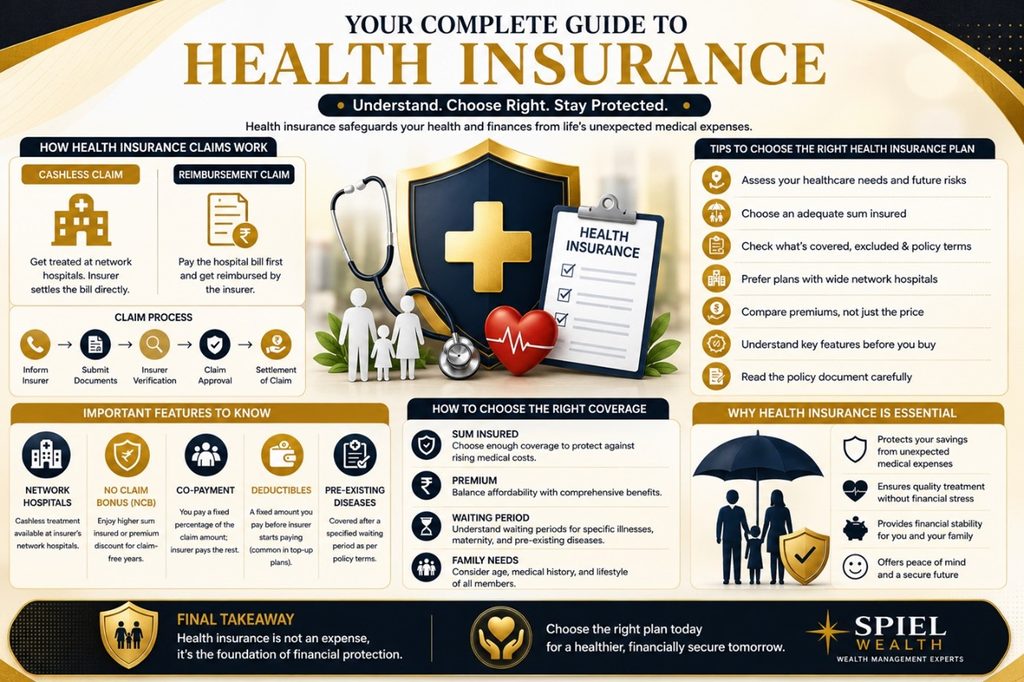
How Health Insurance Claims Work (Cashless vs Reimbursement & Claim Process)
Health insurance claims are generally settled through two methods—Cashless Claims and Reimbursement Claims. Understanding how each process works helps policyholders receive timely financial support during medical emergencies and avoid delays in claim settlement.
| Aspect | Cashless Claim | Reimbursement Claim |
| Meaning | The insurer directly settles eligible medical expenses with the network hospital. | The policyholder pays the hospital bills first and later claims reimbursement from the insurer. |
| Hospital Requirement | Available only at the insurer’s network hospitals. | Can be used at both network and non-network hospitals, subject to policy terms. |
| Payment Process | The insurance company pays the approved amount directly to the hospital. | The insured pays the expenses initially and receives reimbursement after claim approval. |
| Documentation | Pre-authorization form, health insurance card, identity proof, and medical records are generally required. | Original hospital bills, discharge summary, prescriptions, diagnostic reports, claim form, and payment receipts are required. |
| Claim Approval | The insurer reviews and approves the claim before or during hospitalization. | The insurer verifies the submitted documents after treatment before processing the reimbursement. |
| Out-of-Pocket Expenses | Only non-covered expenses or deductibles need to be paid by the policyholder. | The policyholder bears the entire hospital bill initially and receives the eligible amount later. |
| Processing Time | Generally faster since the settlement happens directly with the hospital. | Usually takes longer due to document verification and reimbursement procedures. |
| Best Suitable For | Planned treatments and emergencies at network hospitals. | Treatment at non-network hospitals or situations where cashless services are unavailable. |
Health Insurance Claim Process
Whether you choose a cashless or reimbursement claim, the overall process follows a similar sequence. First, the policyholder or hospital informs the insurance company about the hospitalization. The required claim documents are then submitted for verification. The insurer reviews the policy coverage, medical records, and eligibility of the claim before approving the admissible amount. Once verification is complete, the claim is settled either by directly paying the hospital in a cashless claim or by reimbursing the policyholder for eligible expenses in a reimbursement claim.
Understanding both claim methods and keeping the necessary documents ready can help ensure a smooth and hassle-free health insurance claim experience.
Important Features to Know (Network Hospitals, NCB, Co-payment, Deductibles & Pre-existing Diseases)
Before purchasing a health insurance policy, it is important to understand the key features that influence your coverage, claim experience, and overall benefits. Knowing these terms can help you compare policies more effectively and choose a plan that best suits your healthcare and financial needs.
Network Hospitals
Network hospitals are healthcare facilities that have a tie-up with the insurance company. If you receive treatment at one of these hospitals, you can usually avail cashless hospitalization, where the insurer directly settles eligible medical expenses with the hospital. A larger network of hospitals provides greater convenience and easier access to quality healthcare.
No Claim Bonus (NCB)
A No Claim Bonus is a reward offered by insurers when no claims are made during a policy year. Depending on the policy, the insurer may increase the sum insured without raising the premium or provide a premium discount at renewal. NCB encourages policyholders to use their health insurance only when necessary while rewarding claim-free years.
Co-payment
A co-payment is the fixed percentage of the medical bill that the policyholder agrees to pay, while the insurance company pays the remaining eligible amount. For example, if a policy has a 10% co-payment clause, the insured is responsible for paying 10% of the approved claim amount. Policies with co-payment generally have lower premiums but involve higher out-of-pocket expenses during claims.
Deductibles
A deductible is the amount that the policyholder must pay before the insurance coverage begins. It is commonly applicable in top-up and super top-up health insurance plans. Choosing a higher deductible can reduce the premium, but it also means the insured must bear a larger portion of medical expenses before the insurer contributes.
Pre-existing Diseases
Pre-existing diseases are medical conditions that an individual has before purchasing a health insurance policy. Most insurers cover these conditions only after the completion of a specified waiting period. Understanding the waiting period and coverage conditions for pre-existing diseases is essential to avoid claim-related surprises in the future.
A clear understanding of these important health insurance features helps you compare policies more confidently, manage medical expenses effectively, and choose a plan that offers comprehensive financial protection when you need it most.
Tips to Choose the Right Health Insurance Plan
Selecting the right health insurance plan is not just about finding the lowest premium—it’s about choosing a policy that provides adequate financial protection when you need it the most. A well-chosen plan should match your healthcare needs, budget, age, and future medical requirements.
Think of choosing a health insurance plan like building a safety shield. Every feature adds another layer of protection for you and your family.
| Feature | What to Check | Why It Matters |
| Coverage (Sum Insured) | Choose a sufficient sum insured based on your age, city, family size, and medical inflation. | Higher coverage helps manage expensive treatments without exhausting your savings. |
| Premium | Compare premiums along with the benefits offered instead of choosing the cheapest plan. | A balanced premium ensures good protection at an affordable cost. |
| Waiting Period | Review waiting periods for pre-existing diseases, maternity benefits, and specific treatments. | Shorter waiting periods provide access to benefits sooner. |
| Network Hospitals | Check whether reputed hospitals near your home or workplace are included in the insurer’s network. | A larger network makes cashless hospitalization more convenient. |
| Claim Settlement Record | Review the insurer’s claim settlement performance and customer service quality. | A reliable insurer can make the claim process smoother during emergencies. |
| Policy Inclusions & Exclusions | Read the policy wording carefully to understand what is covered and what is excluded. | This helps avoid claim surprises later. |
| No Claim Bonus (NCB) | Look for plans that increase your sum insured or reward you for claim-free years. | NCB enhances your coverage without significantly increasing the premium. |
| Co-payment & Deductibles | Understand whether you need to pay a portion of the claim amount yourself. | Lower co-payments and suitable deductibles reduce your out-of-pocket expenses. |
| Pre-existing Disease Coverage | Check the waiting period and conditions for existing medical conditions. | Early coverage for pre-existing illnesses provides better long-term financial security. |
| Renewability & Additional Benefits | Prefer plans offering lifetime renewability, health check-ups, wellness programs, and useful add-ons. | These features ensure continuous protection and added value throughout your life. |
The right health insurance plan is one that offers the best balance of coverage, affordability, claim support, and long-term benefits. Comparing multiple policies and understanding their features before making a decision can help you secure quality healthcare while protecting your financial future.
How Spiel Wealth Helps You Choose the Right Health Insurance Plan
Choosing the right health insurance plan can be overwhelming with so many options available. Spiel Wealth simplifies the process by helping you compare health insurance plans based on your healthcare needs, budget, and long-term financial goals.
From selecting the right coverage and sum insured to understanding policy features, network hospitals, and waiting periods, we help you make informed decisions with confidence. We also provide ongoing support for policy renewals and claim-related assistance, ensuring a smooth and hassle-free insurance experience.
At Spiel Wealth, our focus is on helping you secure the right health insurance solution to protect both your health and your financial future.
Final Takeaway: Why Health Insurance is the Foundation of Financial Protection
Health insurance is more than just a medical expense cover—it is a key pillar of a strong financial plan. It protects your savings from unexpected healthcare costs, ensures access to quality medical treatment, and provides financial stability during medical emergencies.
Choosing the right health insurance plan at the right time can help you and your family stay prepared for life’s uncertainties while reducing the burden of rising healthcare expenses. By making health insurance a priority, you build a stronger financial foundation and gain greater peace of mind for the future.