
Expert Health & Safety Guide: Everything You Need to Know
Good health and financial security go hand in hand. An Expert Health & Safety Guide helps you understand how to stay prepared for medical emergencies through healthy lifestyle choices, preventive healthcare, regular check-ups, and the right health insurance coverage.
Beyond buying a policy, it is important to understand your coverage, claim process, policy benefits, and healthcare needs. Making informed decisions today can help protect your health, reduce financial stress, and provide peace of mind for you and your family.
How Rising Medical Inflation Impacts Your Health Insurance
Medical inflation refers to the continuous increase in healthcare costs, including hospitalization, surgeries, medicines, and diagnostic tests. As treatment expenses rise, a health insurance policy that was once sufficient may no longer provide adequate financial protection.
If your sum insured is too low, you may have to pay a significant portion of medical expenses from your own pocket. Reviewing your health insurance regularly and increasing your coverage when needed can help you stay protected against rising healthcare costs.
Choosing an adequate sum insured and considering options like super top-up plans can provide better long-term financial security. Spiel Wealth helps you review, compare, and choose health insurance plans that keep pace with rising medical expenses, ensuring comprehensive protection for you and your family.
How to Avoid Health Insurance Claim Rejections
Health insurance claims are often rejected due to incomplete information, policy violations, or missing documentation. Following a few simple precautions can help ensure a smooth and successful claim process.
- Disclose Complete Medical History – Always provide accurate details about your existing illnesses, previous treatments, and lifestyle habits while purchasing the policy.
- Read the Policy Terms Carefully – Understand the policy coverage, exclusions, waiting periods, and claim conditions before making a claim.
- Choose a Network Hospital – Opt for a hospital that is part of your insurer’s cashless network to simplify the claim process.
- Inform the Insurer on Time – Notify your insurance company within the specified time limit for planned or emergency hospitalization.
- Keep All Medical Documents Safe – Maintain original hospital bills, prescriptions, diagnostic reports, discharge summaries, and payment receipts for claim verification.
- Check Waiting Periods – Ensure that the illness or treatment is not under the waiting period before submitting a claim.
- Verify Policy Coverage – Confirm that the treatment, procedure, or hospitalization is covered under your health insurance policy.
- Fill Claim Forms Correctly – Double-check all information before submitting claim forms to avoid errors or delays.
- Renew Your Policy on Time – Keep your policy active by paying premiums before the due date to avoid claim rejection due to policy lapse.
- Follow the Insurer’s Claim Process – Submit all required documents and complete the claim procedure as per the insurer’s guidelines to improve the chances of successful claim approval.
When Should You Upgrade Your Health Insurance Coverage?
Your health insurance needs can change over time due to changes in your lifestyle, family, income, or medical expenses. Upgrading your health insurance coverage at the right time ensures you remain financially protected against rising healthcare costs.
- Your Current Sum Insured is No Longer Sufficient – If medical treatment costs have increased significantly, consider increasing your coverage.
- You Get Married or Start a Family – Adding your spouse or children may require a higher sum insured or a family floater plan.
- Medical Inflation is Rising – As hospitalization and treatment costs continue to increase, upgrading your coverage helps maintain adequate financial protection.
- Your Income Has Increased – A higher income allows you to choose a plan with better benefits and broader coverage.
- You Have New Healthcare Needs – If you are diagnosed with a medical condition or have higher healthcare risks, consider a policy with enhanced coverage.
- You Need Better Benefits – Upgrade if you want additional features such as higher room rent limits, critical illness cover, maternity benefits, or wellness programs.
- Your Existing Policy Has Limited Coverage – If your current plan excludes important treatments or has restrictive conditions, switching to a more comprehensive policy may be beneficial.
- You Want Higher Financial Protection – If you want to reduce out-of-pocket medical expenses during hospitalization, increasing your sum insured or purchasing a super top-up plan can provide extra security.
Review your health insurance coverage regularly to ensure it continues to meet your changing healthcare needs and provides adequate protection against future medical expenses.
Common Myths About Health Insurance That You Should Stop Believing
Many people delay buying health insurance or choose the wrong policy because of common misconceptions. Understanding the facts can help you make better financial and healthcare decisions.
- Myth 1: I’m Young, So I Don’t Need Health Insurance
Reality: Medical emergencies can happen at any age. Buying health insurance early also helps you get lower premiums and shorter waiting periods. - Myth 2: Employer Health Insurance is Enough
Reality: Employer-provided coverage may not be sufficient and usually ends when you leave your job. Having an individual policy provides continuous protection. - Myth 3: The Cheapest Policy is the Best Choice
Reality: A lower premium often means lower coverage or more restrictions. Always compare the policy’s overall benefits. - Myth 4: Health Insurance Covers Every Medical Expense
Reality: Every policy has exclusions, waiting periods, and coverage limits. Read the policy document carefully before purchasing. - Myth 5: Healthy People Don’t Need Health Insurance
Reality: Health insurance is meant for unexpected medical emergencies. Buying it while you’re healthy ensures better coverage and affordability. - Myth 6: Claim Settlement is Always Difficult
Reality: If you follow the insurer’s claim process and submit the required documents correctly, claims are generally processed smoothly. - Myth 7: Pre-Existing Diseases Are Never Covered
Reality: Most health insurance policies cover pre-existing diseases after the specified waiting period. - Myth 8: Buying Health Insurance is a One-Time Decision
Reality: Your policy should be reviewed regularly to ensure it continues to meet your healthcare needs as your life and medical expenses change.
Understanding these myths and the facts behind them helps you choose the right health insurance policy and make informed decisions that provide long-term financial and healthcare protection.
Health Insurance for Young Professionals: Why You Should Buy Early
Young professionals often overlook health insurance because they believe they are healthy and unlikely to face medical emergencies. However, purchasing health insurance early can provide long-term financial security, lower premiums, and uninterrupted coverage. Here’s why buying early is a smart decision.
| Reason | Why It Matters |
| Lower Premiums | Younger individuals generally pay lower premiums because they are considered lower-risk by insurers. |
| Shorter Waiting Period Starts Early | Buying a policy early allows waiting periods for pre-existing diseases and specific treatments to finish sooner. |
| Protection Against Medical Emergencies | Unexpected illnesses or accidents can happen at any age, and health insurance helps reduce financial stress. |
| Higher Chances of Policy Approval | Healthy individuals are more likely to get comprehensive coverage without additional restrictions. |
| Medical Inflation Protection | Rising healthcare costs make early health insurance an important financial safeguard. |
| No Dependence on Employer Insurance | A personal health insurance policy remains active even if you change or leave your job. |
| Access to Better Coverage Options | Buying early gives you the flexibility to choose from a wider range of plans and benefits. |
| No Claim Bonus (NCB) Benefits | Claim-free years can increase your sum insured without significantly increasing your premium. |
| Long-Term Financial Security | Health insurance protects your savings by covering expensive medical treatments and hospitalization costs. |
| Peace of Mind | Knowing you have financial protection allows you to focus on your career and future goals without worrying about unexpected medical expenses. |
Buying health insurance early is not just about meeting today’s healthcare needs—it’s about building long-term financial protection while enjoying better coverage, affordable premiums, and greater peace of mind.
Health Insurance for Senior Citizens: Key Features to Look For
As people age, the chances of requiring medical treatment and hospitalization increase. A health insurance plan for senior citizens should provide comprehensive coverage, easy claim support, and benefits that address age-related healthcare needs. Choosing the right policy can help reduce the financial burden of medical expenses during retirement.
- Higher Sum Insured – Choose a policy with adequate coverage to manage increasing hospitalization and treatment costs.
- Coverage for Pre-Existing Diseases – Check whether the policy covers existing medical conditions after the applicable waiting period.
- Shorter Waiting Period – Prefer plans with shorter waiting periods for pre-existing diseases and specified treatments.
- Wide Network of Hospitals – Ensure the insurer has a large network of hospitals offering cashless treatment.
- Cashless Claim Facility – Select a policy that provides a smooth and hassle-free cashless claim process.
- Day-Care Treatment Coverage – Verify that the policy covers modern medical procedures that do not require 24-hour hospitalization.
- Pre and Post-Hospitalization Benefits – Look for coverage of medical consultations, diagnostic tests, and medicines before and after hospitalization.
- No or Low Co-Payment – Choose a plan with minimal co-payment requirements to reduce out-of-pocket expenses.
- Lifetime Renewability – Opt for a policy that offers lifetime renewal so coverage continues without age restrictions.
- Good Claim Settlement Record – Select an insurer known for efficient claim processing and reliable customer support.
Choosing a health insurance plan with these features can provide senior citizens with better medical protection, financial security, and peace of mind while managing healthcare expenses in later years.
Health Insurance for Families: How to Ensure Complete Protection
Health insurance is essential for protecting your family’s health and finances against unexpected medical expenses. A well-chosen policy ensures that every family member has access to quality healthcare without putting pressure on your savings during emergencies.
When choosing a family health insurance plan, consider your family’s size, age, medical history, and future healthcare needs. Look for a policy with an adequate sum insured, comprehensive coverage, a wide network of hospitals, and a hassle-free cashless claim facility. Also, review the policy’s waiting periods, exclusions, and renewal benefits before making a decision.
As your family grows and healthcare costs increase, review your coverage regularly to ensure it continues to provide sufficient protection. The right health insurance plan offers long-term financial security and peace of mind for your entire family.
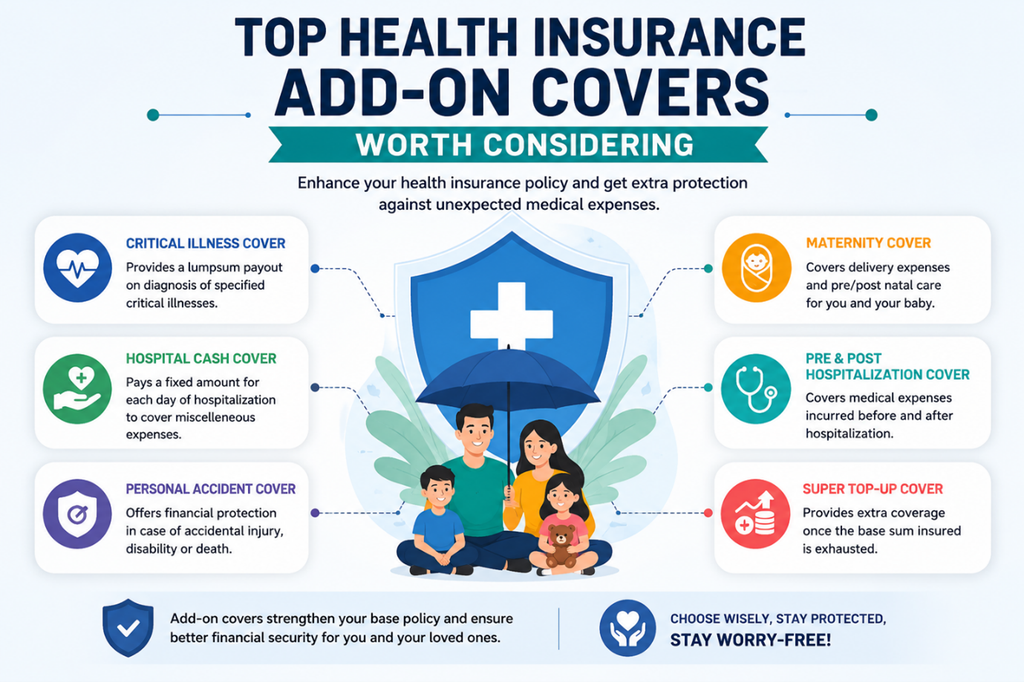
Top Health Insurance Add-On Covers Worth Considering
How Lifestyle Habits Can Affect Your Health Insurance
Your lifestyle habits can directly impact your health and influence your health insurance. Habits such as smoking, excessive alcohol consumption, poor diet, and lack of physical activity increase the risk of serious illnesses, which may lead to higher medical expenses.
Insurance companies may consider these risk factors during policy evaluation. In some cases, unhealthy lifestyle habits can result in higher premiums, medical tests, or specific policy conditions.
Maintaining a healthy lifestyle through regular exercise, a balanced diet, and routine health check-ups can help reduce health risks and support long-term financial protection by making the most of your health insurance coverage.
Annual Health Check-ups: Why They Matter Even If You Have Health Insurance
Health insurance covers medical expenses, but annual health check-ups help prevent health problems before they become serious. Regular screenings can detect conditions like diabetes, high blood pressure, and heart disease at an early stage, making treatment more effective.
Many health insurance policies also offer free annual health check-ups as a benefit. Using these preventive services helps you stay healthy, reduce future medical expenses, and make the most of your health insurance coverage.
Emergency Hospitalization: What to Do Before, During, and After Admission
Medical emergencies can happen without warning, making it important to know the right steps to follow. Being prepared can help ensure timely treatment, reduce stress, and make the health insurance claim process smoother.
| Stage | What You Should Do |
| Before Admission | Carry your health insurance card or e-card, keep a valid ID proof ready, and inform your insurer or TPA if possible. If available, choose a network hospital for cashless treatment. |
| During Admission | Provide your health insurance details at the hospital, complete the required forms, and submit the necessary documents. Keep copies of all medical records, prescriptions, and reports. |
| During Treatment | Stay informed about your treatment, maintain communication with the hospital and insurer, and keep track of all medical expenses and documents. |
| At the Time of Discharge | Verify the final hospital bill, discharge summary, and prescriptions. Ensure all documents are complete before leaving the hospital. |
| After Discharge | Preserve all original bills, reports, prescriptions, and payment receipts. Submit any additional documents required for reimbursement if the treatment was not cashless. |
| Claim Follow-up | Track the claim status with your insurer, respond promptly to any document requests, and retain copies of all claim-related communication for future reference. |
Following these steps can help ensure a hassle-free hospitalization experience, faster claim processing, and better financial protection during medical emergencies.
How to Keep Your Health Insurance Policy Active Without Lapses
Keeping your health insurance policy active is essential to ensure uninterrupted financial protection during medical emergencies. A policy lapse can result in the loss of coverage, waiting period benefits, and accumulated renewal advantages.
Pay your renewal premium on or before the due date and enable auto-debit or payment reminders to avoid missing deadlines. Always keep your contact details, nominee information, and personal records updated so you receive timely renewal notifications from your insurer.
Review your policy every year to ensure it still meets your healthcare needs and renew it without any gaps. Maintaining continuous coverage helps you retain important benefits such as No Claim Bonus (NCB), waiting period credits, and lifetime renewability, while ensuring you’re protected whenever you need medical care.
Health Insurance Review Checklist: Is Your Current Policy Still Enough?
Your health insurance policy should not be a one-time purchase. As your lifestyle, family responsibilities, and healthcare costs change, it’s important to review your policy regularly to ensure it still provides adequate protection.
Before renewing or continuing your existing policy, check whether your sum insured is sufficient to cover rising medical expenses. Review the policy coverage, waiting periods, exclusions, network hospitals, and claim benefits to ensure they still meet your healthcare needs. If you’ve recently gotten married, started a family, or developed new medical requirements, your current policy may need an upgrade.
Also, compare your existing plan with newer health insurance options available in the market. Better coverage, additional benefits, or improved claim features may now be available at a competitive premium. A regular policy review helps you identify coverage gaps, stay protected against medical inflation, and ensure your health insurance continues to provide the financial security you need.