
What is a Health Insurance Buyer’s Checklist?
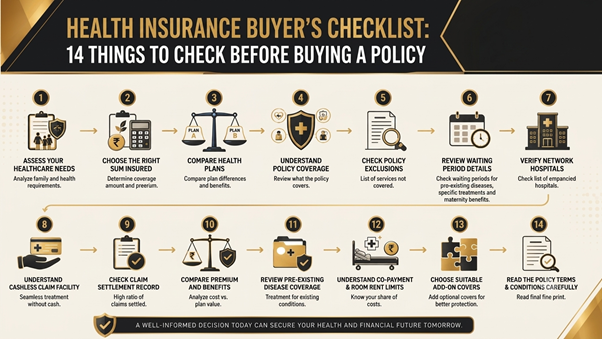
A Health Insurance Buyer’s Checklist is a simple guide that helps you compare and evaluate health insurance plans before making a purchase. It ensures you review important factors such as coverage, sum insured, premium, waiting periods, exclusions, network hospitals, claim process, and renewal terms.
Using a buyer’s checklist helps you choose a policy that matches your healthcare needs and budget while avoiding common mistakes. It also enables you to make an informed decision and select a health insurance plan that offers reliable financial protection for you and your family.
Why You Should Compare Health Insurance Before Buying
Comparing health insurance plans before buying helps you choose a policy that offers the right balance of coverage, benefits, and cost. Since every insurer has different premiums, waiting periods, network hospitals, and claim terms, comparing plans ensures you select one that fits your healthcare needs and budget.
It also helps you avoid inadequate coverage, understand policy features, and make an informed decision. A well-compared health insurance plan provides better financial protection and greater peace of mind during medical emergencies.
Check Your Health Coverage Needs
Before purchasing a health insurance plan, it is important to assess your healthcare needs. Consider factors such as your age, lifestyle, family size, medical history, and existing health conditions to determine the level of coverage you require. Your healthcare needs today may differ from those in the future, so choosing a plan with adequate protection is essential.
Evaluating your health coverage needs helps you select the right sum insured, avoid underinsurance, and ensure you are financially prepared for unexpected medical expenses. A policy that aligns with your personal and family healthcare requirements provides better long-term financial security and peace of mind.
Choose the Right Sum Insured
The sum insured is the maximum amount your health insurance policy will pay for eligible medical expenses during a policy year. Choosing the right sum insured is essential to ensure you have sufficient financial protection against hospitalization, surgeries, and other healthcare costs.
When deciding the coverage amount, consider factors such as your age, family size, city of residence, medical history, lifestyle, and the rising cost of healthcare. Selecting an adequate sum insured helps you avoid out-of-pocket expenses during medical emergencies and ensures your savings remain protected in the long run.
Compare Health Insurance Plans
Comparing health insurance plans helps you choose a policy that offers the best value for your healthcare needs and budget. Instead of focusing only on the premium, compare important factors such as the sum insured, coverage benefits, waiting periods, exclusions, network hospitals, claim settlement process, and renewal benefits.
A careful comparison allows you to identify the plan that provides comprehensive protection while avoiding unexpected costs or coverage gaps. Taking the time to evaluate multiple options helps you make a confident and well-informed decision for long-term financial security.
Understand Policy Exclusions
Before buying a health insurance plan, it is important to understand the policy exclusions—the medical conditions, treatments, or expenses that are not covered by the insurer. Knowing these exclusions helps you avoid unexpected claim rejections and choose a policy that matches your healthcare needs.
Some common examples of policy exclusions include:
- Cosmetic or plastic surgery (unless medically necessary)
- Pre-existing diseases during the applicable waiting period
- Dental and vision treatments not specifically covered by the policy
- Self-inflicted injuries or treatment related to substance abuse
- Experimental or unapproved medical treatments
- Non-medical expenses such as registration charges, toiletries, food for attendants, and personal comfort items
Always read the policy wording carefully to understand its exclusions, waiting periods, and conditions. Being aware of what is not covered helps you make an informed decision and prevents surprises during the claim process.
Check Waiting Period Details
The waiting period is the time you must wait before certain illnesses, treatments, or medical conditions become eligible for coverage under your health insurance policy. Since waiting periods vary across insurers, reviewing them before purchasing a policy is essential to avoid unexpected claim rejections.
Some common waiting periods include:
- Initial Waiting Period – Usually 30 days for most illnesses (except accidents).
- Pre-Existing Diseases (PED) – Typically 2 to 4 years, depending on the insurer and policy.
- Specific Diseases – Certain conditions, such as hernia, cataract, or joint replacement, may have a waiting period of 1 to 2 years.
- Maternity Benefits – Generally range from 9 months to 4 years, depending on the plan.
Understanding these waiting periods helps you choose a policy that matches your healthcare needs and ensures you are aware of when different benefits become available. Always check the policy document for the exact waiting period applicable to your chosen health insurance plan.
Review Network Hospitals
Before purchasing a health insurance plan, check the insurer’s network hospital list. Network hospitals are healthcare facilities that have partnered with the insurance company to provide cashless hospitalization, allowing eligible medical expenses to be settled directly between the insurer and the hospital.
A policy with a large network of hospitals gives you greater flexibility in choosing a healthcare provider, especially during emergencies. It also reduces the need to make large upfront payments and ensures quicker access to quality medical treatment.
When reviewing network hospitals, make sure that reputed hospitals near your home, workplace, or frequently visited locations are included. Choosing a plan with a strong hospital network can make the claim process smoother and provide greater convenience when you need medical care the most.
Understand Cashless Claim Facility
A cashless claim facility allows you to receive medical treatment at a network hospital without paying the full hospitalization expenses upfront. Instead, the insurance company directly settles the eligible medical bills with the hospital, making the treatment process more convenient during emergencies.
To avail this benefit, you must be admitted to a network hospital and complete the required pre-authorization process. Once the insurer approves the claim, eligible expenses are paid directly to the hospital, while you only need to pay for non-covered items or charges not included under your policy.
Before purchasing a health insurance plan, check the insurer’s network hospital list and understand the cashless claim process. A strong cashless facility can reduce financial stress and ensure a smoother hospitalization experience when you need medical care the most.
Check Claim Settlement Record
Before buying a health insurance policy, review the insurer’s claim settlement record, as it reflects the company’s ability to process and settle claims efficiently. A strong claim settlement history indicates that the insurer has a consistent track record of handling genuine claims, giving policyholders greater confidence during medical emergencies.
While comparing insurers, consider factors such as the Claim Settlement Ratio (CSR), average claim processing time, and customer service quality. An insurer with a reliable claim settlement record can help ensure a smoother and faster claims experience, reducing financial stress when you need healthcare support the most.
Compare Premium and Benefits
When choosing a health insurance plan, avoid selecting a policy based only on the lowest premium. Instead, compare the premium with the benefits offered, such as the sum insured, hospitalization coverage, network hospitals, waiting periods, claim process, renewal benefits, and additional features like No Claim Bonus (NCB).
A slightly higher premium may provide significantly better coverage and long-term financial protection. Comparing both the cost and the benefits helps you choose a health insurance plan that offers the best value for your healthcare needs and budget.
Understand Room Rent Limits
Before purchasing a health insurance policy, it is important to understand the room rent limit, which is the maximum amount your insurer will pay for your hospital room during hospitalization. Some policies offer coverage for a specific room category, while others provide no room rent restrictions, giving you greater flexibility.
If you choose a room that exceeds your policy’s room rent limit, you may have to pay the additional cost yourself. In some cases, it can also lead to proportionate deductions, where a part of other hospitalization expenses is reduced based on the room selected.
Reviewing the room rent terms before buying a policy helps you avoid unexpected out-of-pocket expenses and ensures a smoother claim experience during hospitalization.
Check Pre-Existing Disease Coverage
Before buying a health insurance policy, check how it covers pre-existing diseases (PEDs)—medical conditions that existed before purchasing the policy, such as diabetes, hypertension, asthma, or thyroid disorders. Most insurers cover these conditions only after a specified waiting period, which may vary from one policy to another.
Comparing waiting periods and coverage terms across different health insurance plans can help you choose a policy that best suits your medical needs. Understanding these conditions in advance reduces the risk of claim-related surprises and ensures you receive the required financial protection when the waiting period is completed.
Review Co-Payment Conditions
Before purchasing a health insurance policy, carefully review the co-payment clause. Co-payment is the percentage of the medical bill that you agree to pay, while the insurance company covers the remaining eligible amount. For example, if your policy has a 10% co-payment and your approved hospital bill is ₹5 lakh, you will pay ₹50,000, and the insurer will settle the remaining eligible amount.
Policies with a co-payment option often have lower premiums, but they also increase your out-of-pocket expenses during a claim. Understanding the co-payment terms before buying a policy helps you avoid unexpected costs and choose a plan that matches your financial comfort and healthcare needs.
Choose Suitable Add-On Covers
Health insurance add-on covers are optional benefits that enhance the protection offered by your base policy. They help cover specific healthcare needs and provide additional financial security during medical emergencies.
- Critical Illness Cover – Provides a lump sum payout if you are diagnosed with specified critical illnesses such as cancer, heart attack, or stroke, helping manage treatment and recovery expenses.
- Personal Accident Cover – Offers financial protection against accidental death, permanent disability, or partial disability resulting from an accident.
- Hospital Cash Benefit – Pays a fixed daily cash allowance for each day of hospitalization, helping cover incidental expenses that may not be included in the policy.
- Maternity Cover – Covers pregnancy-related hospitalization, delivery expenses, and, in some plans, newborn baby care after the applicable waiting period.
- OPD Cover – Reimburses eligible outpatient expenses such as doctor consultations, diagnostic tests, and prescribed medicines without hospitalization.
- Room Rent Waiver – Removes or increases room rent restrictions, allowing you to choose a higher room category without additional financial burden.
- Super Top-Up Cover – Increases your overall health insurance coverage after a specified deductible is crossed, offering higher protection at a relatively affordable premium.
- Wellness & Preventive Care Benefits – Includes annual health check-ups, fitness programs, vaccinations, and wellness rewards to encourage preventive healthcare and healthy living.
Compare Individual vs Family Floater Plans
Choosing between an Individual Health Insurance Plan and a Family Floater Plan depends on your family size, healthcare needs, and budget. The table below highlights the key differences to help you make an informed decision.
| Feature | Individual Health Insurance | Family Floater Health Insurance |
| Coverage | Covers only one individual. | Covers multiple family members under a single policy. |
| Sum Insured | Each insured member gets a separate sum insured. | A single sum insured is shared by all insured family members. |
| Premium | Separate premium for each individual policy. | One premium covers the entire family, making it more economical. |
| Best For | Individuals, senior citizens, or people with specific health needs. | Young couples and families with children. |
| Claim Impact | One person’s claim does not affect another person’s coverage. | Claims by one member reduce the shared sum insured available to others. |
| Cost | Can be more expensive when buying separate policies for each family member. | Usually more cost-effective than multiple individual policies. |
| Customization | Coverage can be tailored to the individual’s healthcare needs. | Common coverage for all members with limited individual customization. |
| Renewal | Each policy is renewed separately. | Only one policy renewal is required for the entire family. |
| Flexibility | Suitable for members with different medical needs. | Ideal when family members have similar healthcare requirements. |
| Ideal Choice | Best for individuals seeking dedicated health coverage. | Best for families looking for affordable and convenient protection under one plan. |
Read Policy Terms Carefully
Before purchasing a health insurance policy, take the time to read the policy terms and conditions carefully. Understanding the policy document helps you know exactly what is covered, what is excluded, the waiting periods, claim procedures, renewal rules, and any limits or conditions that may apply.
Pay special attention to details such as coverage limits, room rent restrictions, co-payment clauses, pre-existing disease coverage, and claim requirements. Reading the policy thoroughly before buying helps you avoid misunderstandings, reduce the chances of claim-related issues, and choose a health insurance plan that truly meets your healthcare and financial needs.