

Introduction to Term Insurance for NRIs
Term insurance for NRIs helps provide financial security to family members in India even while living abroad. It offers a high life cover at an affordable premium for a fixed policy term, ensuring loved ones remain financially protected during unexpected situations.
Many Indian insurers now offer NRI-friendly term plans with online application processes, flexible premium payment options, and global coverage benefits. Factors such as country of residence, occupation, health condition, and lifestyle may affect eligibility and premium rates.
Choosing the right term insurance plan allows NRIs to protect their family’s future, manage financial responsibilities, and maintain long-term financial stability with peace of mind.
Why NRIs Need Term Insurance
NRIs often manage financial responsibilities across multiple countries, including supporting family members, maintaining investments, and handling liabilities in India. Term insurance helps provide financial security to dependents by ensuring they remain protected during unexpected situations.
A suitable term plan can help cover household expenses, outstanding loans, children’s education, and future financial goals without creating additional financial pressure on the family.
Indian term insurance plans are also considered cost-effective for NRIs, offering high coverage, flexible payment options, and convenient online policy management. Choosing the right plan helps NRIs secure their family’s financial future with greater confidence and peace of mind.
Eligibility Criteria for NRIs
NRIs can purchase term insurance in India if they meet the eligibility conditions set by the insurance company. These requirements may vary slightly between insurers, but most companies follow a similar evaluation process based on age, income, health, and country of residence.
Age Requirement
Most insurers allow NRIs to apply for term insurance from around 18 years of age, while the maximum entry age may range between 60 and 75 years depending on the plan.
Valid NRI Status
Applicants must qualify as Non-Resident Indians (NRIs), Overseas Citizens of India (OCI), or Persons of Indian Origin (PIO), as accepted by the insurer.
Income and Financial Documents
Insurers generally ask for proof of income, employment details, bank statements, or tax documents to assess financial eligibility and coverage amount.
Medical Evaluation
Medical tests may be required depending on age, health condition, country of residence, and chosen sum assured.
Country of Residence
The insurer may review the applicant’s country of residence because risk levels, regulations, and premium rates can vary between countries.
Identity and Address Proof
Documents such as passport, visa, overseas address proof, PAN card, and photographs are commonly required during the application process.
In simple terms:
NRIs can easily buy term insurance in India if they meet the insurer’s basic requirements related to age, health, income, and residency status.
Key Features of NRI Term Insurance Plans
High Life Coverage at Affordable Premiums
NRI term insurance plans generally provide large coverage amounts at competitive premium rates, helping families stay financially protected.
Global Financial Protection
These plans offer coverage even if the policyholder is living or working outside India, subject to policy conditions.
Flexible Premium Payment Options
Premiums can usually be paid annually, half-yearly, quarterly, or monthly through convenient online payment methods.
Online Application and Policy Management
Many insurers allow NRIs to apply, upload documents, and manage policies digitally from anywhere in the world.
Customizable Policy Terms
NRIs can choose policy duration, payout structure, and coverage amount based on their financial goals and responsibilities.
Rider Benefits for Extra Protection
Additional riders such as critical illness, accidental death, or disability benefits can be added to strengthen coverage.
Tax Benefits in India
Premiums and policy benefits may qualify for tax advantages under applicable Indian tax laws.
Claim Support for Family Members
In case of an unfortunate event, nominees in India can receive financial support through a structured claim process.
In simple terms:
NRI term insurance plans provide flexible, affordable, and globally accessible financial protection for families and long-term financial responsibilities.
Factors Affecting NRI Term Insurance Premiums
Age of the Applicant
Premiums are generally lower at a younger age because health risks are comparatively less. As age increases, insurers may charge higher premiums due to increased medical and life-related risks.
Country of Residence
The country where an NRI lives can affect premium rates. Insurers evaluate factors like healthcare conditions, political stability, safety risks, and local regulations before deciding premiums.
Health Condition and Medical History
Existing diseases, past surgeries, or long-term medical conditions may increase premiums because they raise the insurer’s overall risk exposure.
Lifestyle Habits
Habits such as smoking, alcohol consumption, or participation in risky activities can lead to higher premium costs due to higher health and accident risks.
Occupation Type
NRIs working in hazardous jobs like construction, mining, aviation, or offshore industries may have to pay higher premiums because of increased occupational risk.
Coverage Amount Chosen
A higher sum assured provides stronger financial protection but also increases premium costs as the insurer takes on greater financial liability.
Policy Term Duration
Longer policy terms usually result in higher premiums because the insurer provides life coverage for an extended period of time.
Add-On Riders
Adding riders such as critical illness, disability, or accidental death benefits increases coverage but also raises the total premium amount.
In simple terms:
NRI term insurance premiums are mainly influenced by age, health, country of residence, lifestyle, occupation, and the level of coverage selected.
Medical Tests & Documentation Requirements
Before approving a term insurance policy for NRIs, insurance companies generally conduct a verification process that includes medical evaluations and document checks. These steps help insurers assess the applicant’s health condition, identity, and financial profile accurately.
Medical Tests for NRIs
Depending on the applicant’s age, coverage amount, health condition, and country of residence, insurers may require medical examinations. Common tests can include blood tests, urine tests, blood pressure checks, ECG, diabetes screening, and other routine health assessments.
In some cases, NRIs may complete medical tests either in India or at approved diagnostic centers abroad, depending on the insurer’s process. Honest disclosure of medical history and lifestyle habits is extremely important to avoid future claim issues.
Documents Commonly Required
- Passport copy
- Visa or work permit details
- Overseas address proof
- PAN card
- Income proof or salary documents
- Bank statements
- Passport-size photographs
- Medical reports (if applicable)
Why Documentation is Important
Proper documentation helps insurers verify the applicant’s identity, residency status, income, and financial eligibility. Accurate information also supports smoother policy issuance and claim settlement in the future.
In simple terms:
Medical tests and document verification help insurers provide suitable coverage while ensuring transparency and hassle-free claim processing for NRIs.
Countries Covered Under NRI Term Insurance
Most Indian insurance companies provide term insurance coverage to NRIs living in many parts of the world. However, the availability of coverage may depend on the insurer’s internal guidelines, the applicant’s country of residence, and local risk conditions.
Generally, NRIs residing in countries with stable economic, political, and healthcare systems can easily apply for term insurance plans in India. Insurers often categorize countries based on risk levels before approving policies and deciding premium rates.
Commonly Covered Countries
Indian insurers usually provide coverage for NRIs living in countries such as:
- United Arab Emirates (UAE)
- United States (USA)
- Canada
- United Kingdom (UK)
- Australia
- Singapore
- New Zealand
- Saudi Arabia
- Qatar
- Oman
- Kuwait
- Germany and other European countries
Country-Based Risk Evaluation
Premiums and eligibility may differ depending on factors such as healthcare standards, political stability, crime rates, and occupational risks in the country of residence.
Restricted or High-Risk Regions
Some insurers may restrict coverage or apply stricter conditions for applicants living in high-risk or politically unstable regions.
In simple terms:
Most NRIs living in major international countries can buy term insurance in India, though eligibility and premiums may vary based on the country of residence.
Tax Benefits for NRIs on Term Insurance
NRIs purchasing term insurance plans in India may also receive certain tax advantages under Indian tax laws, provided they meet the applicable conditions. These benefits can help reduce overall tax liability while ensuring financial protection for the family.
Tax Deduction on Premiums
Premiums paid towards a term insurance policy may qualify for deduction under Section 80C of the Income Tax Act, subject to the prescribed limits. This benefit is generally available if the premium is paid through taxable income in India.
Tax-Free Death Benefit
The amount received by the nominee after the policyholder’s death is usually exempt from tax under Section 10(10D), as per applicable rules and conditions.
Benefits on Health Riders
If the policy includes health-related riders such as critical illness coverage, additional tax benefits may be available under Section 80D, depending on the plan structure.
Important Considerations for NRIs
Tax treatment may vary based on residential status, source of income, Double Taxation Avoidance Agreements (DTAA), and country-specific regulations. It is always advisable to review tax implications carefully before purchasing a policy.
In simple terms:
Term insurance can help NRIs not only protect their family financially but also provide potential tax-saving benefits under Indian tax regulations.
Riders Available with NRI Term Plans
Riders are additional protection benefits that can be added to a basic NRI term insurance plan. These add-ons help increase financial security by covering specific risks such as accidents, serious illnesses, disability, or loss of income. Choosing suitable riders can make a term insurance policy more effective and comprehensive for NRIs and their families.
Accidental Death Benefit Rider
This rider provides an extra payout to the nominee if the policyholder’s death occurs due to an accident. It adds an additional layer of financial support for the family.
Critical Illness Rider
A critical illness rider offers financial assistance if the insured is diagnosed with major illnesses such as cancer, heart disease, kidney failure, or stroke. The amount received can help manage medical and recovery expenses.
Terminal Illness Rider
If the policyholder is diagnosed with a terminal illness meeting the policy conditions, the insurer may provide an early payout from the sum assured.
Waiver of Premium Rider
Under this rider, future premium payments may be waived if the insured becomes permanently disabled or critically ill, while the policy benefits continue.
Accidental Disability Rider
This rider provides financial compensation if the policyholder suffers permanent or partial disability due to an accident.
Income Benefit Rider
Instead of a single lump sum payout, this rider allows the nominee to receive regular monthly income for a fixed period, helping manage ongoing family expenses.
Why Riders Matter for NRIs
NRIs often handle financial responsibilities across multiple countries. Riders help strengthen the basic term plan by providing additional financial protection against unexpected situations and long-term risks.
In simple terms:
Riders help NRIs customize their term insurance plan with extra protection for health, accidents, disability, and family financial security.
Common Challenges NRIs Face While Buying Insurance
Complex Documentation Process
NRIs often need to submit multiple documents such as passport copies, visa details, overseas address proof, income records, and medical reports, which can make the application process lengthy.
Country-Based Restrictions
Insurance eligibility and premium rates may vary depending on the applicant’s country of residence, local regulations, and overall risk profile.
Higher Premiums for Certain Locations or Occupations
NRIs working in high-risk professions or living in politically unstable regions may face increased premium costs or limited coverage options.
Medical Test Requirements
Many insurers require medical examinations for NRIs, especially for higher coverage amounts or older applicants. Coordinating these tests from abroad can sometimes be challenging.
Understanding Policy Terms and Conditions
Differences in policy language, exclusions, claim rules, and tax implications may create confusion if not reviewed carefully.
Currency and Payment Concerns
Managing premium payments across currencies and international banking systems can sometimes create inconvenience for policyholders.
Limited Awareness About Available Plans
Many NRIs are unaware of the range of term insurance plans and rider options available specifically for overseas Indians.
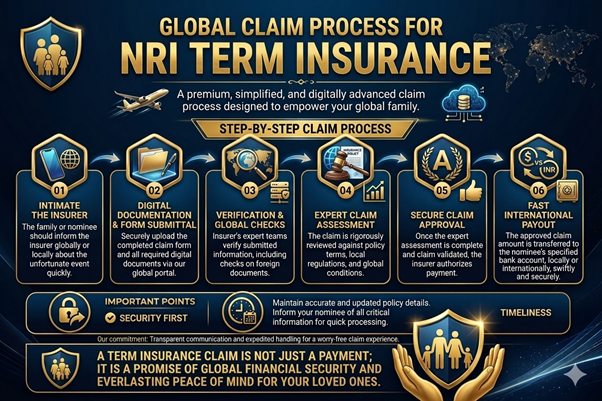
Claim Process Coordination
Family members may face difficulties understanding claim procedures and document requirements during stressful situations if policy details are not properly communicated.
In simple terms:
NRIs may face challenges related to documentation, medical tests, international regulations, and policy understanding while buying insurance, making proper planning and guidance important.
Common Mistakes NRIs Should Avoid
Providing Incomplete Information
Failing to disclose accurate details about health condition, occupation, travel history, or country of residence can create complications during claim settlement.
Choosing Insufficient Coverage
Many NRIs underestimate their financial responsibilities in India and abroad, resulting in lower coverage that may not fully support their family’s future needs.
Ignoring Policy Exclusions
Not reviewing exclusions carefully can lead to misunderstandings regarding situations or conditions that are not covered under the policy.
Buying Insurance Only Based on Low Premiums
Selecting a plan solely because it is cheaper may compromise important benefits, claim support, and long-term protection quality.
Delaying the Purchase Decision
Waiting too long to buy term insurance can increase premium costs and reduce eligibility due to age or health-related issues.
Not Adding Important Riders
Skipping riders such as critical illness or accidental coverage may leave financial gaps during emergencies or medical situations.
Ignoring Currency and Payment Planning
NRIs should ensure premium payments are managed properly to avoid policy lapses due to banking or currency-related issues.
Not Informing Family About the Policy
If nominees are unaware of policy details, claim procedures can become difficult during unexpected situations.
In simple terms:
Avoiding these common mistakes can help NRIs choose a more reliable term insurance plan and ensure smoother financial protection for their families.
How to Choose the Right NRI Term Insurance Plan
Selecting the right term insurance plan is important for NRIs who want to protect their family’s financial future while managing responsibilities across countries. A well-chosen policy should provide adequate coverage, flexible features, and reliable long-term support.
Assess Your Financial Responsibilities
Before choosing a plan, evaluate your family’s future expenses, outstanding loans, children’s education costs, and overall financial commitments in India and abroad.
Choose Adequate Coverage Amount
Select a sum assured that can comfortably support your dependents and maintain their financial stability during unexpected situations.
Compare Multiple Insurance Providers
Review different insurers based on premium costs, policy benefits, customer support, claim settlement performance, and flexibility of features.
Check Country Eligibility
Ensure the insurer provides coverage in your country of residence and understand any special conditions related to your location or occupation.
Review Policy Terms Carefully
Understand the policy duration, premium payment rules, exclusions, waiting periods, and claim process before making a final decision.
Consider Useful Riders
Adding riders such as critical illness, accidental death, or disability benefits can strengthen your financial protection.
Understand Medical and Documentation Requirements
Check whether medical tests are required and prepare the necessary documents to avoid delays during policy approval.
Verify Claim Support Process
Choose an insurer that offers a simple and transparent claim process to help your family during difficult times.
In simple terms:
The right NRI term insurance plan should offer strong financial protection, flexible features, affordable premiums, and dependable claim support based on your long-term family needs.
Final Conclusion / Takeaway
Term insurance is an essential financial protection tool for NRIs who want to secure their family’s future while managing responsibilities across countries. From protecting loved ones and covering financial liabilities to ensuring long-term stability, the right term insurance plan can provide valuable peace of mind during uncertain situations.
Choosing a suitable NRI term insurance plan requires careful evaluation of coverage amount, policy features, premium affordability, riders, claim support, and insurer reliability. Understanding documentation requirements, country-specific conditions, and policy exclusions can also help avoid future complications.
At Spiel Wealth, we believe financial protection should be simple, transparent, and aligned with your long-term goals. Our focus is to help NRIs explore suitable insurance solutions that match their family needs, lifestyle, and financial responsibilities with confidence and clarity.