
What is a Critical Illness Rider?
A critical illness rider is an additional benefit that can be added to a term insurance policy for extra financial protection against serious medical conditions. This rider provides a lump sum payout if the policyholder is diagnosed with a covered critical illness mentioned in the policy terms.
Common illnesses covered may include cancer, heart attack, stroke, kidney failure, and other major health conditions, depending on the insurer and plan selected. The payout can be used for medical treatment, hospital expenses, recovery costs, or managing daily financial needs during the treatment period.
Adding a critical illness rider strengthens the overall insurance coverage and helps reduce financial stress during medical emergencies. Although it increases the premium slightly, it offers valuable support and better financial security during serious health situations.
Importance of Critical Illness Coverage
Critical illness coverage plays an important role in financial planning by providing financial support during serious medical conditions. Major illnesses such as cancer, heart attack, stroke, or kidney failure can lead to high treatment costs and loss of regular income, creating financial pressure on families.
A critical illness rider helps manage these unexpected expenses through a lump sum payout after diagnosis of a covered illness. This amount can be used for medical treatment, recovery expenses, household costs, or lifestyle needs during difficult times.
Having critical illness coverage improves overall financial security and reduces the burden of healthcare expenses. It acts as an additional layer of protection that helps individuals focus on recovery without major financial stress.
How Critical Illness Riders Work
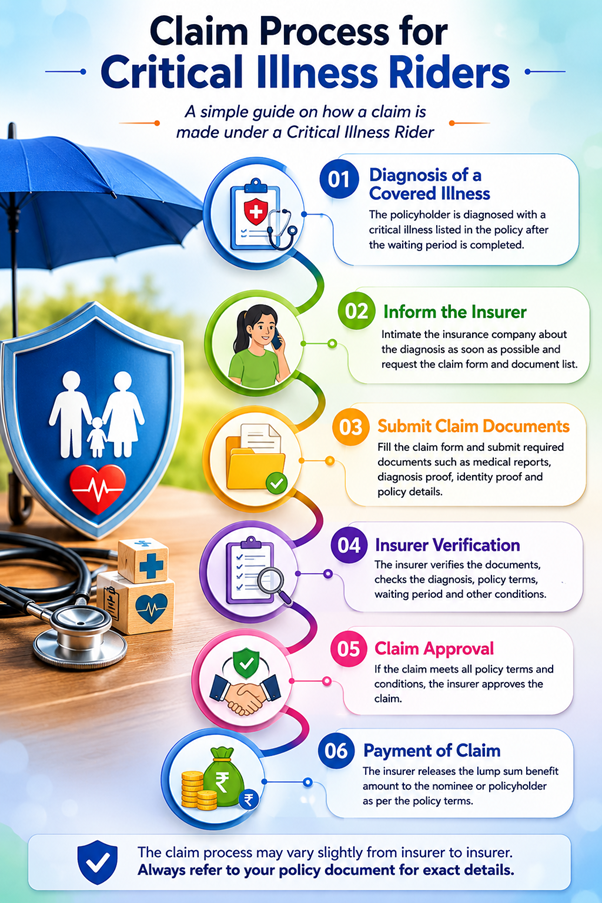
A critical illness rider adds extra financial protection to a term insurance policy. If the policyholder is diagnosed with a serious illness covered under the policy, the insurer provides a lump sum payout after claim approval. This financial support helps manage medical expenses and income loss during treatment and recovery.
- Attached with Base Policy – The rider is added along with a term insurance plan for extra protection.
- Coverage for Serious Illnesses – It covers specified illnesses like cancer, heart attack, stroke, and kidney failure.
- Lump Sum Payout – The insurer pays a fixed amount after diagnosis of a covered illness.
- Flexible Usage – The payout can be used for treatment, household expenses, loans, or recovery costs.
- Policy Conditions Apply – Waiting period and survival period conditions may apply before claim approval.
- Extra Financial Security – It reduces financial stress during major medical emergencies.
Difference Between Term Insurance and Critical Illness Rider
| Aspect | Term Insurance | Critical Illness Rider |
| Purpose | Provides financial protection to the family after the policyholder’s death | Provides financial support if the policyholder is diagnosed with a serious illness |
| Benefit Type | Death benefit payout | Lump sum payout on diagnosis of covered illness |
| Coverage Focus | Family financial security | Medical and recovery expense support |
| Claim Trigger | Death of the policyholder during policy term | Diagnosis of specified critical illness |
| Usage of Payout | Household expenses, loans, future financial goals | Treatment costs, recovery expenses, income support |
| Policy Nature | Main insurance policy | Additional rider attached to base policy |
| Common Coverage | General life protection | Illnesses like cancer, stroke, heart attack, kidney failure |
| Financial Role | Long-term family protection | Extra financial support during health emergencies |
Common Illnesses Covered Under Critical Illness Riders
Critical illness riders generally provide financial protection against major health conditions that may require expensive treatment and long recovery periods. The illnesses covered can vary depending on the insurer and policy terms, but most plans include several serious medical conditions.
- Cancer – Coverage for specified stages or types of cancer as mentioned in the policy.
- Heart Attack – Financial support in case of a major cardiac event.
- Stroke – Coverage for serious brain-related medical emergencies causing lasting damage.
- Kidney Failure – Protection against permanent kidney failure requiring regular dialysis or transplant.
- Major Organ Transplant – Coverage for organ replacement surgeries such as liver, heart, or lung transplant.
- Coronary Artery Bypass Surgery – Support for major heart surgery expenses.
- Paralysis – Financial assistance in cases of permanent loss of movement.
- Multiple Sclerosis – Coverage for severe neurological disorders affecting the nervous system.
These riders help reduce financial stress during critical medical situations and provide additional support beyond regular insurance coverage.
Benefits of Adding a Critical Illness Rider
Adding a critical illness rider to a term insurance policy provides extra financial protection during serious medical emergencies. It helps policyholders manage high treatment costs and maintain financial stability during difficult health situations.
- Financial Support During Illness – Provides a lump sum payout after diagnosis of a covered critical illness.
- Helps Manage Medical Expenses – Supports hospitalization, treatment, and recovery-related costs.
- Income Protection – Reduces financial pressure if regular income is affected during treatment.
- Flexible Usage of Funds – The payout can be used for medical or personal financial needs.
- Enhanced Insurance Coverage – Strengthens overall policy protection beyond basic life cover.
- Peace of Mind – Helps individuals focus on recovery without major financial stress.
- Affordable Additional Protection – Offers broader coverage at a relatively lower additional premium.
Lump Sum Payout Advantage
One of the major benefits of a critical illness rider is the lump sum payout feature. If the policyholder is diagnosed with a covered critical illness, the insurance company provides a fixed amount as a one-time payment after claim approval. This financial support helps individuals manage the economic impact of serious medical conditions more effectively.
The biggest advantage of a lump sum payout is flexibility. The amount received can be used not only for medical treatment and hospitalization expenses but also for household costs, loan repayments, recovery-related expenses, or temporary income loss during treatment. Unlike regular health insurance, there are generally no restrictions on how the payout must be used.
This benefit helps reduce financial stress during challenging health situations and allows the policyholder and family to focus more on recovery and long-term financial stability.
Medical Expense Protection Through Riders
Medical expense protection through riders helps policyholders manage the high costs associated with serious illnesses and medical emergencies. By adding a critical illness or health-related rider to a term insurance policy, individuals receive additional financial support beyond the basic life cover.
The payout received through these riders can be used for hospitalization expenses, surgeries, medicines, recovery treatments, and other healthcare-related costs. This financial assistance helps reduce the burden of unexpected medical expenses and prevents savings or investments from being affected during treatment.
Having medical expense protection through riders strengthens overall financial security and provides peace of mind during difficult health situations.
Income Protection During Serious Illness
Serious illnesses can affect a person’s ability to work and earn a regular income, creating financial pressure for the family. A critical illness rider helps provide income protection by offering financial support when the policyholder is diagnosed with a covered medical condition.
The lump sum payout received through the rider can help manage daily household expenses, loan repayments, medical costs, and other financial responsibilities during the treatment and recovery period. This support helps maintain financial stability even when regular income is temporarily reduced or stopped.
Income protection during serious illness allows individuals and families to focus more on recovery without facing major financial stress.
Waiting Period in Critical Illness Riders
The waiting period in a critical illness rider is the fixed time after purchasing the policy during which claims for covered illnesses are not accepted. In most insurance policies, the waiting period is generally around 90 days, though it may vary depending on the insurer and plan.
If a critical illness is diagnosed during this period, the rider benefit may not be payable according to policy terms. The waiting period helps insurers reduce immediate claim risks after policy issuance.
Understanding this condition is important because the coverage becomes fully active only after the waiting period ends. Reading policy details carefully helps avoid confusion during future claim settlement.
Survival Period Explained
The survival period in a critical illness rider refers to the minimum number of days the policyholder must survive after being diagnosed with a covered critical illness to become eligible for the rider payout. This period is mentioned in the policy terms and varies depending on the insurer.
In many policies, the survival period is commonly around 30 days, although it may differ from one insurance plan to another. If the policyholder does not survive beyond this specified duration, the critical illness benefit may not be payable under the rider conditions.
Understanding the survival period is important because it directly affects claim eligibility. Reviewing this condition carefully helps policyholders choose suitable coverage and avoid confusion during the claim process.
Exclusions in Critical Illness Riders
Exclusions in critical illness riders are the conditions or situations where the insurance company may not provide claim benefits. These exclusions are clearly mentioned in the policy terms and help define the limits of coverage under the rider.
Common exclusions may include pre-existing illnesses not disclosed during policy purchase, illnesses diagnosed during the waiting period, self-inflicted injuries, substance abuse-related conditions, or illnesses caused by risky activities. Some policies may also exclude early-stage medical conditions or specific treatments not covered under the rider.
Understanding exclusions is important before purchasing a critical illness rider because it helps policyholders know what is and is not covered. Reading policy conditions carefully ensures better financial planning and reduces the chances of claim-related misunderstandings in the future.
Factors to Consider Before Choosing a Rider
Choosing the right critical illness rider requires careful evaluation of personal financial needs, health risks, and long-term protection goals. Before adding a rider to a term insurance policy, it is important to check the illnesses covered under the plan and understand the policy conditions clearly.
Individuals should also review important factors such as waiting period, survival period, exclusions, claim process, and payout terms. Comparing premium costs with the level of coverage provided helps ensure that the rider remains affordable while offering meaningful financial protection.
Another important consideration is the insurer’s reputation and claim settlement record, as reliable claim support becomes crucial during medical emergencies. Selecting a suitable rider based on lifestyle, family medical history, and future healthcare needs can provide stronger financial security and peace of mind.
Cost of Critical Illness Riders
The cost of a critical illness rider depends on several factors such as the policyholder’s age, health condition, lifestyle habits, coverage amount, and the number of illnesses covered under the rider. Generally, adding this rider increases the premium of the base term insurance policy, but it also provides additional financial protection during serious medical conditions.
Younger and healthier individuals usually receive lower premium rates because they are considered lower-risk applicants. On the other hand, factors such as smoking, existing medical conditions, or higher coverage requirements may increase the rider cost.
Although the premium may be slightly higher, the financial support provided during critical illnesses can help manage expensive treatments, income loss, and recovery expenses. This makes critical illness riders a valuable addition to long-term financial and healthcare planning.
Critical Illness Rider vs Standalone Health Insurance
| Aspect | Critical Illness Rider | Standalone Health Insurance |
| Meaning | An additional benefit added to a term insurance policy | A separate insurance policy for medical expenses |
| Main Purpose | Provides lump sum payout after diagnosis of covered critical illness | Covers hospitalization and medical treatment expenses |
| Coverage Type | Limited to specified critical illnesses | Covers a wide range of medical and hospitalization costs |
| Payout Method | Fixed lump sum amount after claim approval | Reimbursement or cashless treatment based on expenses |
| Usage of Funds | Can be used for any financial need | Mainly used for healthcare-related expenses |
| Premium Cost | Usually lower than standalone health insurance | Premium may be higher depending on coverage |
| Flexibility | Works only with the base insurance policy | Independent policy with separate benefits |
| Suitable For | Extra financial support during serious illnesses | Complete healthcare and hospitalization protection |
| Claim Basis | Based on diagnosis of covered illness | Based on actual medical expenses incurred |
| Financial Benefit | Helps manage income loss and recovery costs | Helps reduce direct medical treatment expenses |
Tax Benefits on Critical Illness Riders
Critical illness riders not only provide financial protection during serious medical conditions but may also offer tax benefits under applicable tax laws. The premium paid for eligible health-related riders can qualify for tax deductions, helping policyholders reduce their taxable income while strengthening financial security.
In many cases, tax benefits related to health insurance and critical illness coverage are available under Section 80D of the Income Tax Act, subject to applicable conditions and limits. These deductions can help individuals manage healthcare planning more efficiently.
Tax advantages make critical illness riders beneficial for both medical protection and financial planning. However, policyholders should review current tax regulations and policy conditions carefully, as tax rules may change over time.
Common Mistakes While Buying Critical Illness Riders
Many individuals purchase critical illness riders without fully understanding the policy terms, which can lead to financial difficulties during claim situations. One common mistake is choosing a rider only based on low premium cost instead of checking the illnesses covered and overall benefits provided by the policy.
Another major mistake is ignoring important conditions such as waiting period, survival period, exclusions, and claim eligibility rules. Failing to read these details carefully may create confusion or claim rejection issues in the future.
Some buyers also choose insufficient coverage that may not be enough to manage expensive medical treatments and income loss during recovery. Incomplete disclosure of medical history or lifestyle habits is another serious error that can affect claim approval.
Comparing plans properly, understanding policy conditions, and selecting coverage according to personal healthcare and financial needs can help avoid these mistakes and ensure better long-term protection.
Final Takeaway: Why Critical Illness Riders Matter
Critical illness riders play an important role in strengthening financial protection during serious health emergencies. Medical treatments for major illnesses can be expensive and may also affect regular income, creating financial pressure for individuals and families. Adding a critical illness rider helps provide extra financial support during such situations.
The lump sum payout offered under the rider can help manage treatment expenses, recovery costs, household needs, and other financial responsibilities without disturbing long-term savings or investments. This additional protection allows individuals to focus more on recovery and less on financial stress.
Choosing the right critical illness rider as part of a term insurance plan improves overall financial security and healthcare preparedness. It acts as a valuable safety net that supports both medical and financial stability during unexpected health challenges.