What is Health Insurance for High-Risk Professionals?
Health Insurance for High-Risk Professionals is designed for individuals whose occupations expose them to a higher risk of accidents, injuries, or health-related hazards. Professionals working in physically demanding or hazardous environments often face greater medical risks, making comprehensive health insurance an important part of their financial protection.
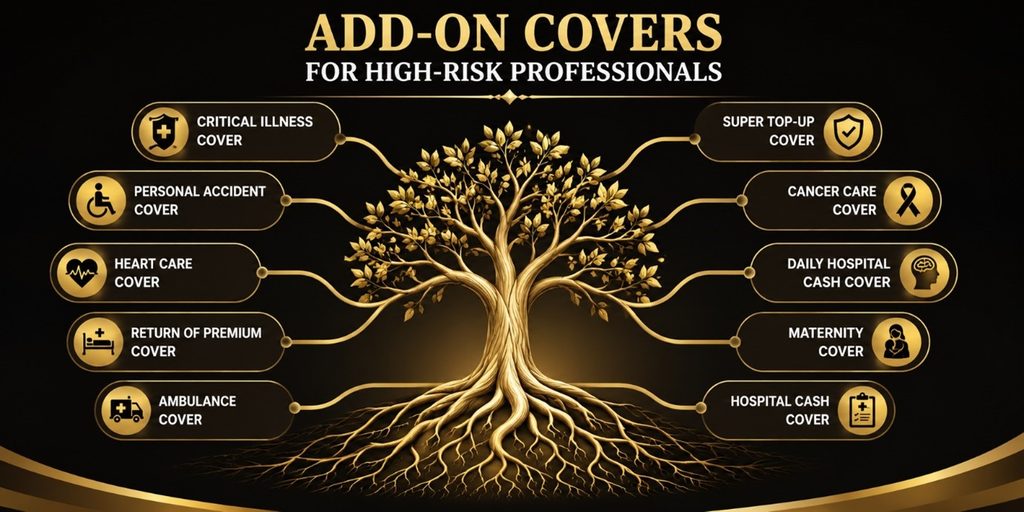
These health insurance plans generally cover hospitalization expenses, surgeries, day-care procedures, pre- and post-hospitalization costs, emergency ambulance services, and cashless treatment at network hospitals, subject to the policy terms and conditions. Depending on the insurer, optional add-on covers such as personal accident cover, critical illness cover, and disability benefits may also be available for enhanced protection.
A well-chosen health insurance plan helps high-risk professionals manage unexpected medical expenses, ensuring they receive timely healthcare without putting financial pressure on themselves or their families.
Who Qualifies as a High-Risk Professional?
A High-Risk Professional is someone whose occupation involves a greater chance of accidents, injuries, exposure to hazardous environments, or physically demanding work. Because these professions carry higher health and safety risks, individuals working in such fields often require comprehensive health insurance to protect themselves against unexpected medical expenses.
While the definition may vary among insurers, occupations involving hazardous conditions, heavy machinery, dangerous locations, or frequent travel are generally considered high-risk during the underwriting process.
Common Examples of High-Risk Professionals
| Profession | Why It Is Considered High-Risk |
| Construction Workers | Risk of falls, heavy equipment, and workplace injuries |
| Factory & Industrial Workers | Exposure to machinery, chemicals, and industrial hazards |
| Miners | Hazardous underground working conditions |
| Firefighters | Exposure to fire, smoke, and emergency rescue situations |
| Police & Security Personnel | Higher risk of physical injuries and emergencies |
| Pilots & Cabin Crew | Frequent travel and occupation-related health risks |
| Truck & Commercial Drivers | Long driving hours and increased accident exposure |
| Oil & Gas Industry Workers | Work in hazardous and high-pressure environments |
| Electricians | Risk of electrical shocks and workplace accidents |
| Healthcare Professionals | Exposure to infectious diseases and medical emergencies |
| Defence & Armed Forces Personnel | Physically demanding duties and operational risks |
| Professional Athletes | Higher chances of sports-related injuries and surgeries |
Individuals working in these or similar occupations should compare health insurance plans carefully to ensure they receive adequate coverage for hospitalization, accidents, and occupation-related health risks, subject to the insurer’s policy terms and underwriting guidelines.
Why High-Risk Professionals Need Health Insurance
High-risk professionals work in occupations where the chances of accidents, injuries, and medical emergencies are higher than average. A health insurance plan helps cover eligible expenses such as hospitalization, surgeries, emergency treatment, ambulance services, and cashless treatment at network hospitals, as per the policy terms.
Having the right health insurance reduces the financial burden of unexpected medical expenses and ensures timely access to quality healthcare, providing greater financial security for both the individual and their family.
Key Features to Look for in Health Insurance for High-Risk Professionals
Choosing the right health insurance plan is essential for high-risk professionals, as their work environment may expose them to greater health and accident-related risks. Before purchasing a policy, evaluate the following features to ensure comprehensive protection.
- Adequate Sum Insured – Choose a coverage amount that can meet high hospitalization and treatment expenses.
- Comprehensive Hospitalization Cover – Ensure the policy covers hospitalization, surgeries, ICU charges, and day-care procedures.
- Cashless Treatment Facility – Prefer insurers with a large network of hospitals for hassle-free cashless treatment.
- Coverage for Occupation-Related Risks – Check whether the policy provides protection for medical conditions arising from your profession, subject to policy terms.
- Personal Accident Cover – Consider plans or add-ons that provide financial support for accidental injuries or disability.
- Critical Illness Cover – Look for optional coverage for major illnesses such as cancer, heart attack, or stroke.
- Short Waiting Period – Compare waiting periods for pre-existing diseases and specific treatments.
- Co-payment and Sub-limits – Review room rent limits, co-payment clauses, and treatment caps carefully.
- Claim Settlement Record – Choose an insurer with a strong claim settlement history and efficient customer support.
- Lifetime Renewability – Select a policy that offers continuous renewal without unnecessary restrictions.
- Affordable Premium with Maximum Benefits – Compare different plans to find the best balance between premium cost and coverage.
Selecting a policy with these features helps high-risk professionals stay financially protected while ensuring timely access to quality healthcare during medical emergencies.
How to Choose the Right Sum Insured for High-Risk Professionals
Choosing the right sum insured is crucial for high-risk professionals because they are more likely to face workplace accidents, injuries, or medical emergencies. The sum insured should be sufficient to cover hospitalization, surgeries, and other treatment expenses without creating a financial burden.
When selecting the coverage amount, consider factors such as the nature of your profession, age, existing medical conditions, city of residence, family responsibilities, and rising healthcare costs. Professionals working in hazardous environments or physically demanding jobs should consider a higher sum insured to ensure adequate financial protection.
You can also enhance your coverage by opting for a Super Top-Up Plan, which provides additional protection at a comparatively affordable premium once the base sum insured is exhausted.
Choosing a sum insured that balances comprehensive coverage and affordability helps ensure you are financially prepared for unexpected medical emergencies and occupation-related health risks.
What Does Health Insurance Cover for High-Risk Professionals?
Health insurance for High-Risk Professionals is designed to provide financial protection against medical expenses arising from illnesses, accidents, or hospitalization. While the exact coverage depends on the insurer and policy selected, most plans generally include the following benefits.
- Hospitalization Expenses – Covers eligible in-patient hospitalization costs, including room charges, nursing, and treatment expenses.
- Day-Care Procedures – Covers medical procedures that do not require 24-hour hospitalization, such as cataract surgery or dialysis.
- Pre- & Post-Hospitalization Expenses – Covers eligible medical consultations, diagnostic tests, and medicines before and after hospitalization for the specified period.
- Emergency Ambulance Charges – Covers ambulance expenses incurred during medical emergencies, subject to policy limits.
- Cashless Treatment – Provides cashless hospitalization at network hospitals, reducing the need for upfront payments.
- ICU and Surgical Expenses – Covers eligible intensive care unit (ICU) charges and surgical procedures.
- Accidental Injury Treatment – Covers medical expenses resulting from accidental injuries, as per the policy terms.
- Personal Accident Cover (If Added) – Offers financial protection against accidental death or disability through an optional add-on or separate cover.
- Critical Illness Cover (Optional) – Provides a lump-sum benefit upon diagnosis of specified critical illnesses, if included in the policy.
- Annual Health Check-ups – Many health insurance plans include preventive health check-ups to monitor overall health.
Before purchasing a policy, carefully review the coverage, exclusions, occupation-related conditions, and optional add-on benefits to ensure the plan meets your professional and healthcare needs.
Common Exclusions in Health Insurance for High-Risk Occupations
While health insurance provides financial protection against many medical expenses, every policy also contains certain exclusions. Understanding these exclusions before purchasing a policy can help high-risk professionals avoid claim disputes and choose a plan that best suits their occupational needs.
| Exclusion | Description |
| Pre-Existing Diseases During Waiting Period | Existing medical conditions are generally covered only after the applicable waiting period. |
| Self-Inflicted Injuries | Medical expenses resulting from intentional self-harm are generally excluded. |
| Cosmetic or Aesthetic Treatments | Procedures performed only to improve appearance are usually not covered unless medically necessary. |
| Non-Medical Expenses | Items such as registration charges, toiletries, gloves, masks, and other non-medical consumables may not be covered unless specified. |
| Experimental or Unproven Treatments | Treatments not recognized under the policy terms are generally excluded. |
| Substance or Alcohol-Related Treatment | Medical expenses arising due to alcohol or drug abuse may not be covered. |
| Adventure or Hazardous Activities | Injuries caused during adventure sports or hazardous recreational activities may be excluded unless specifically covered. |
| Occupation-Specific Exclusions | Some insurers may exclude or limit coverage for injuries directly related to certain hazardous professions. |
| Waiting Period for Specific Diseases | Certain illnesses and treatments become eligible only after completing the specified waiting period. |
| Policy-Specific Exclusions | Each insurer may have additional exclusions based on the policy terms and underwriting guidelines. |
Before buying health insurance, carefully read the policy document to understand all exclusions, waiting periods, and occupation-related conditions. Knowing what is not covered helps you make an informed decision and reduces the chances of claim rejection in the future.
How to Compare Health Insurance Plans for High-Risk Professionals
High-risk professionals should compare health insurance plans carefully because their occupation may involve a greater risk of accidents, injuries, and medical emergencies. Instead of selecting a plan based only on the premium, compare the coverage, claim support, hospital network, and occupation-related benefits to ensure comprehensive financial protection.
Comparison of Popular Health Insurance Plans in India
| Insurance Company | Popular Plan | Cashless Network Hospitals | Key Highlights | Suitable For |
| HDFC ERGO | Optima Secure | 13,000+ | High coverage, Restore Benefit, Secure Benefit | Professionals seeking comprehensive protection |
| Niva Bupa | ReAssure 2.0 | 10,000+ | Unlimited refill benefit, modern treatment coverage | Professionals requiring higher coverage |
| Care Health Insurance | Care Supreme | 11,400+ | No Claim Bonus, annual health check-up, optional add-ons | Individuals with physically demanding jobs |
| ICICI Lombard | Health AdvantEdge | 9,500+ | Comprehensive hospitalization and cashless treatment | Professionals looking for flexible coverage |
| Star Health | Comprehensive Health Insurance | 14,000+ | Wide hospital network and extensive medical coverage | High-risk workers needing broad access to hospitals |
| Aditya Birla Health Insurance | Activ One Max | 11,000+ | Wellness rewards, chronic care support, modern treatment | Professionals focused on preventive healthcare |
Note: Hospital network, coverage, premium, and benefits are subject to change by the insurer. Always verify the latest policy details before purchasing.
Factors to Compare Before Buying
- Sum insured and overall medical coverage.
- Coverage for occupation-related injuries, subject to policy terms.
- Cashless hospital network in your city.
- Waiting periods for pre-existing diseases.
- Co-payment and room rent limits.
- Claim settlement record and customer service quality.
- Optional add-on covers such as Personal Accident Cover, Critical Illness Cover, and Super Top-Up Plans.
- Premium vs. benefits to ensure long-term value.
Comparing these factors rather than choosing the lowest premium helps high-risk professionals select a health insurance plan that offers better medical protection, smoother claim settlement, and financial security against occupation-related health risks.
Common Mistakes to Avoid While Buying Health Insurance for High-Risk Professionals
Buying health insurance is especially important for high-risk professionals, but selecting the wrong policy can leave you underinsured when you need coverage the most. Avoiding these common mistakes will help you choose a plan that offers better protection against occupation-related medical risks.
- Choosing Coverage Based Only on Premium – A low-cost policy may provide limited benefits and insufficient coverage for high-risk occupations.
- Selecting an Inadequate Sum Insured – Lower coverage may not be enough to meet the cost of hospitalization, surgeries, or emergency treatment.
- Not Disclosing Your Occupation Correctly – Providing incorrect or incomplete occupational details can lead to claim disputes or policy cancellation.
- Ignoring Policy Exclusions – Always review what is not covered, especially occupation-related exclusions and waiting periods.
- Not Comparing Multiple Plans – Compare insurers based on coverage, claim settlement record, hospital network, and overall benefits instead of choosing the first available plan.
- Overlooking Cashless Hospital Network – Ensure the insurer has a wide network of hospitals near your workplace and residence.
- Skipping Optional Add-On Covers – Covers like Personal Accident, Critical Illness, and Super Top-Up Plans can provide valuable additional protection.
- Ignoring Co-payment and Sub-limits – Understand room rent limits, co-payment clauses, and treatment caps before buying the policy.
- Not Reviewing Waiting Periods – Compare waiting periods for pre-existing diseases and specific treatments before making a decision.
- Failing to Review the Policy Regularly – As your career or health risks change, update your coverage to ensure it continues to meet your needs.
Avoiding these mistakes can help high-risk professionals choose a health insurance plan that provides comprehensive coverage, smoother claim processing, and stronger financial protection against unexpected medical emergencies.
How Occupation Affects Health Insurance Premiums
Your occupation is one of the factors insurers may consider when determining your health insurance premium. Jobs that involve greater physical risk, hazardous environments, or a higher chance of accidents are often viewed as carrying a higher insurance risk. As a result, professionals in these occupations may pay higher premiums or have additional underwriting requirements.
Insurers assess the nature of your work, workplace conditions, frequency of travel, and exposure to occupational hazards before deciding the premium. The final premium also depends on other factors such as age, medical history, sum insured, lifestyle, city of residence, and policy benefits.
Occupation vs. Premium Impact
| Occupation Type | Risk Level | Premium Impact |
| IT Professionals / Office Employees | Low | Usually lower premiums |
| Teachers / Accountants / Bank Employees | Low | Standard premium rates |
| Doctors / Nurses | Moderate | May vary depending on work environment |
| Commercial Drivers | High | Higher premium due to accident exposure |
| Construction Workers | High | Higher premium because of workplace injury risks |
| Factory & Industrial Workers | High | Premium may increase based on occupational hazards |
| Electricians | High | Higher premium due to electrical risk exposure |
| Firefighters / Police Personnel | Very High | Premium may be higher because of emergency duties |
| Oil & Gas Industry Workers | Very High | Higher premium due to hazardous working conditions |
Note: Premiums and underwriting decisions vary by insurer. Occupation is only one factor among several used to determine your health insurance premium.
By accurately disclosing your occupation and comparing multiple health insurance plans, you can choose a policy that offers the right balance of coverage, premium, and financial protection for your profession.
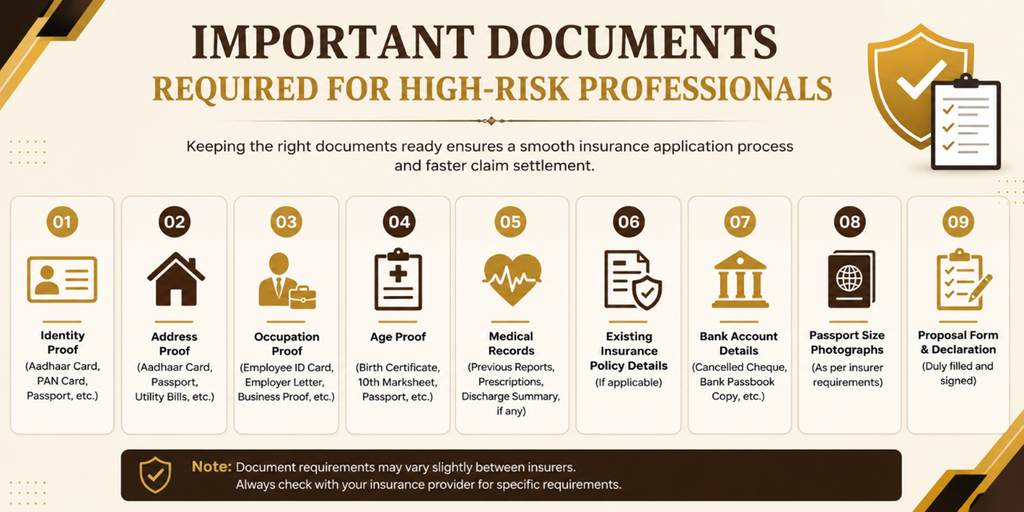
How to File a Health Insurance Claim for High-Risk Professionals
Filing a health insurance claim is a straightforward process when the required procedures are followed correctly. Whether the claim is for an illness, workplace injury, or accidental hospitalization, submitting the necessary documents on time helps ensure faster claim settlement and minimizes delays.
Step 1: Inform the Insurance Company
Notify your insurance company or Third-Party Administrator (TPA) as soon as hospitalization is planned or immediately in case of an emergency.
Step 2: Visit a Network Hospital
For a cashless claim, choose a hospital that is part of the insurer’s network and present your health insurance card along with a valid identity proof.
Step 3: Submit the Required Documents
Provide the completed claim form, identity proof, health insurance card, doctor’s prescription, hospital records, discharge summary, medical bills, and any occupation-related documents if requested by the insurer.
Step 4: Claim Verification
The insurer reviews the submitted documents and verifies whether the treatment and expenses are covered under the policy terms and conditions.
Step 5: Claim Settlement
- Cashless Claim: The insurer directly settles the approved medical expenses with the network hospital.
- Reimbursement Claim: You pay the hospital bill first and later submit the required documents to receive reimbursement of eligible expenses.
Tips for Faster Claim Approval
- Inform the insurer immediately after hospitalization.
- Submit complete and accurate documents.
- Disclose the correct details of your occupation, if required.
- Keep all original medical bills, reports, and discharge papers safely.
- Track the claim status until the settlement is completed.
Following these steps helps high-risk professionals complete the claim process smoothly and receive timely financial support during medical emergencies.
Tips to Reduce Health Insurance Premiums for High-Risk Professionals
Health insurance premiums for high-risk professionals may be higher due to the nature of their occupation. However, there are several ways to reduce premium costs without compromising on essential medical coverage. Choosing the right policy and maintaining a healthy lifestyle can help you get better value for your insurance.
- Compare Multiple Health Insurance Plans – Evaluate coverage, benefits, and premiums from different insurers before making a decision.
- Choose an Appropriate Sum Insured – Select a coverage amount that matches your healthcare needs without paying for unnecessary benefits.
- Consider a Super Top-Up Plan – Pair a base policy with a Super Top-Up Plan to increase coverage at a lower overall cost.
- Maintain a Healthy Lifestyle – Regular exercise, a balanced diet, and avoiding smoking or excessive alcohol consumption may help you qualify for wellness rewards offered by some insurers.
- Opt for a Higher Deductible – Choosing a suitable deductible can lower your annual premium while maintaining adequate protection.
- Buy Health Insurance Early – Purchasing a policy at a younger age generally results in lower premiums and better long-term benefits.
- Avoid Unnecessary Add-On Covers – Select only those add-ons that are relevant to your profession and healthcare requirements.
- Renew Your Policy on Time – Timely renewals help maintain continuity benefits and prevent premium increases due to policy lapses.
- Take Advantage of No Claim Bonus (NCB) – If you do not make claims during the policy year, many insurers reward you with increased coverage or other policy benefits.
By comparing plans carefully, choosing the right coverage, and maintaining healthy habits, high-risk professionals can manage their health insurance premiums while ensuring strong financial protection against unexpected medical expenses.