What is Section 80D of the Income Tax Act?
Healthcare expenses can place a significant financial burden on individuals and families. To encourage people to purchase health insurance and prepare for medical emergencies, the Government of India introduced Section 80D of the Income Tax Act, 1961. This provision allows eligible taxpayers to claim tax deductions on certain health-related expenses, making health insurance both a financial protection tool and a tax-saving investment.
Understanding Section 80D
Section 80D is a provision under the Income Tax Act that offers tax benefits for eligible health insurance-related expenses. It encourages individuals to invest in health insurance by providing deductions that help reduce their taxable income, subject to the applicable rules and limits.
Purpose of Section 80D
The main objective of Section 80D is to promote financial preparedness for medical emergencies while encouraging people to secure health insurance for themselves and their families. It also supports preventive healthcare by recognizing certain eligible medical expenses under the tax framework.
Why is Section 80D Important?
With rising healthcare costs, having health insurance has become an essential part of financial planning. Section 80D makes health insurance even more beneficial by providing tax advantages in addition to medical coverage. It helps taxpayers manage healthcare expenses more efficiently while also reducing their overall tax burden.
Who is Eligible to Claim Section 80D Deduction?
Section 80D of the Income Tax Act provides tax benefits to eligible taxpayers who incur qualifying health insurance expenses. However, not everyone can claim this deduction. The Income Tax Act specifies who is eligible and for whose health insurance expenses the deduction can be claimed.
Individual Taxpayers
Any resident or non-resident individual who pays eligible health insurance premiums can claim a deduction under Section 80D, subject to the applicable conditions and limits.
Hindu Undivided Families (HUFs)
Hindu Undivided Families (HUFs) are also eligible to claim a deduction under Section 80D for health insurance premiums paid for any member of the HUF.
Family Members Covered Under the Deduction
An individual taxpayer can claim the deduction for health insurance premiums paid for:
- Self
- Spouse
- Dependent children
- Parents (whether dependent or financially independent)
This allows taxpayers to receive tax benefits while securing health insurance for their immediate family.
Senior Citizens
If health insurance is purchased for senior citizen parents, taxpayers may be eligible for higher deduction limits under Section 80D, as prescribed by the Income Tax Act.
Medical Expenses in Certain Cases
In specific situations where a senior citizen does not have health insurance, eligible medical expenses may also qualify for deduction, subject to the conditions laid down under Section 80D.
Section 80D Deduction Limits (Self, Family, Parents & Senior Citizens)
One of the biggest advantages of Section 80D of the Income Tax Act is that it allows taxpayers to claim deductions on eligible health insurance expenses. However, the deduction amount depends on who is covered under the policy and whether the insured persons are senior citizens.
Section 80D Deduction Limits
| Insured Person | Maximum Deduction Allowed |
| Self, Spouse & Dependent Children (below 60 years) | ₹25,000 |
| Parents (below 60 years) | Additional ₹25,000 |
| Self/Family (if insured person is a Senior Citizen) | ₹50,000 |
| Parents (if Senior Citizens) | Additional ₹50,000 |
Maximum Deduction You Can Claim
Self + Family + Parents (Below 60 Years)
If both you and your parents are below 60 years of age, you can claim a deduction of up to ₹50,000 (₹25,000 + ₹25,000).
Self Below 60 Years + Senior Citizen Parents
If you are below 60 years and your parents are senior citizens, the maximum deduction can go up to ₹75,000.
Senior Citizen + Senior Citizen Parents
If both you (or your spouse) and your parents are senior citizens, the maximum deduction available under Section 80D can be ₹1,00,000.
Important Points to Remember
- The deduction is available only for eligible health insurance premiums and qualifying medical expenses as permitted under Section 80D.
- Health insurance premiums should generally be paid through banking or digital payment modes.
- Preventive health check-up expenses are included within the overall deduction limit and are not an additional deduction.
- The deduction limits apply to each financial year.
Understanding these deduction limits helps taxpayers plan their health insurance purchases more effectively while maximizing the tax benefits available under Section 80D.
Health Insurance Premium Eligible Under Section 80D
Section 80D of the Income Tax Act allows taxpayers to claim deductions on eligible health insurance premiums. However, not every health-related payment qualifies for this benefit. Understanding which premiums are eligible can help you claim the correct deduction while filing your income tax return.

Important Conditions
- The health insurance policy should be issued by an insurer approved under applicable regulations.
- Premiums should generally be paid through banking or digital payment modes to qualify for deduction.
- The deduction is available only for eligible persons covered under Section 80D.
- Keep premium receipts and policy documents safely for tax filing and future reference.
Understanding which health insurance premiums qualify under Section 80D helps ensure that you claim the correct tax benefits while protecting yourself and your family against rising healthcare expenses.
Sahi point. Kyunki ye 13-topic wale blog ka 5th topic hai, isme Section 80D ka introduction ya deduction limits dobara repeat nahi hone chahiye. Sirf Preventive Health Check-up benefit explain hona chahiye.
Preventive Health Check-up Benefits Under Section 80D
Preventive healthcare is an important part of maintaining good health. Regular health check-ups help identify potential medical conditions before they become serious, allowing timely treatment and better health management. To encourage people to undergo routine medical examinations, Section 80D provides a tax benefit for eligible preventive health check-up expenses.
What is a Preventive Health Check-up?
A preventive health check-up is a routine medical examination designed to assess your overall health and detect diseases at an early stage. These check-ups may include basic physical examinations, blood tests, heart health assessments, diabetes screening, and other diagnostic tests recommended by healthcare professionals.
Who Can Claim the Benefit?
The tax benefit for preventive health check-up expenses can be claimed for:
- Self
- Spouse
- Dependent children
- Parents
Benefit Available Under Section 80D
Section 80D allows taxpayers to claim a deduction for preventive health check-up expenses. However, this benefit forms part of the overall deduction available under Section 80D and is not an additional deduction.
Why Preventive Health Check-ups Matter
Early Detection of Health Problems
Regular screenings help identify diseases such as diabetes, hypertension, and heart-related conditions before they become severe.
Better Financial Planning
Detecting illnesses early can reduce future treatment costs and minimize unexpected medical expenses.
Encourages Healthy Living
Routine health check-ups promote health awareness and encourage timely lifestyle improvements.
Supports Long-Term Healthcare
Preventive care helps individuals monitor their health regularly, leading to better long-term well-being.
Things to Remember
- Preventive health check-up expenses qualify for tax benefits under Section 80D, subject to the applicable limits.
- Maintain medical bills and payment records for income tax purposes.
- Preventive healthcare should be viewed as an essential part of overall financial and health planning, rather than only as a tax-saving opportunity.
Section 80D vs Section 80C – Key Differences
Sections 80C and 80D are two of the most widely used tax-saving provisions under the Income Tax Act. Although both help reduce taxable income, they serve different purposes. Section 80C encourages long-term savings and investments, while Section 80D focuses on health insurance and healthcare-related expenses. Understanding the difference between these sections helps taxpayers make better financial and tax-planning decisions.
Comparison Between Section 80C and Section 80D
| Parameter | Section 80C | Section 80D |
| Purpose | Encourages savings and investments | Encourages health insurance and healthcare planning |
| Primary Benefit | Tax deduction on eligible investments | Tax deduction on eligible health insurance expenses |
| Applicable For | Individuals and HUFs | Individuals and HUFs |
| Popular Investments/Expenses | PPF, ELSS, EPF, Life Insurance Premium, NSC, Tax Saver FD, Home Loan Principal | Health Insurance Premium, Preventive Health Check-up, Eligible Medical Expenses |
| Maximum Deduction | Up to ₹1.5 lakh per financial year | As per the applicable limits under Section 80D |
| Main Objective | Wealth creation and long-term financial security | Financial protection against healthcare expenses |
Which Section Should You Choose?
The answer is both, if you are eligible.
- Section 80C helps you build long-term wealth through eligible investments.
- Section 80D helps you save tax while protecting yourself and your family against rising medical expenses through health insurance.
Since both sections are independent of each other, eligible taxpayers can claim deductions under both Section 80C and Section 80D, maximizing their overall tax savings.
How to Claim Section 80D Tax Benefits
Claiming tax benefits under Section 80D is a straightforward process if you maintain the required documents and report the eligible deductions correctly while filing your Income Tax Return (ITR). Following the correct procedure ensures that you receive the tax benefits available for eligible health insurance and healthcare expenses.
Step 1: Purchase an Eligible Health Insurance Policy
Ensure that the health insurance policy is purchased for eligible family members covered under Section 80D and that it satisfies the applicable tax provisions.
Step 2: Pay the Premium Through an Eligible Payment Mode
Health insurance premiums should generally be paid through banking channels or digital payment methods to qualify for the deduction. Preventive health check-up expenses may be paid in cash, as permitted under Section 80D.
Step 3: Keep Supporting Documents
Maintain all relevant documents safely, including:
- Health insurance premium receipt
- Insurance policy document
- Payment proof
- Preventive health check-up bills (if applicable)
These documents may be required for verification or future reference.
Step 4: Calculate Your Eligible Deduction
Determine the deduction amount based on the premiums paid for yourself, your family, and your parents, while ensuring it remains within the limits prescribed under Section 80D.
Step 5: Declare the Deduction While Filing Your ITR
While filing your Income Tax Return, enter the eligible deduction amount under the Section 80D category in the appropriate schedule of the ITR form.
Step 6: Verify the Information
Before submitting your return, verify that the premium amount, policy details, and deduction claimed are accurate and supported by valid documents.
Important Points to Remember
- Claim deductions only for eligible expenses covered under Section 80D.
- Retain all supporting documents even after filing your tax return.
- Ensure the deduction claimed does not exceed the prescribed limits.
- Review your health insurance details every financial year before filing your Income Tax Return.
By maintaining proper records and following the correct filing process, you can claim the tax benefits available under Section 80D efficiently while enjoying the financial protection offered by health insurance.
Documents Required to Claim Section 80D Deduction
To claim tax benefits under Section 80D of the Income Tax Act, taxpayers should maintain proper records of eligible health insurance and healthcare-related expenses. Keeping the required documents readily available helps ensure a smooth Income Tax Return (ITR) filing process and supports your deduction claim if verification is required.
1. Health Insurance Premium Receipt
The premium receipt issued by the insurance company serves as proof that the premium has been paid for an eligible health insurance policy.
2. Health Insurance Policy Document
A copy of the policy document helps verify details such as the policyholder’s name, insured members, policy period, and coverage.
3. Payment Proof
Keep proof of payment, such as:
- Bank statement
- Credit card statement
- Debit card transaction
- UPI or net banking confirmation
- Cheque payment record
These documents help establish that the premium was paid through an eligible payment mode.
4. Preventive Health Check-up Bills (If Applicable)
If you are claiming tax benefits for preventive health check-up expenses, retain the original bills or invoices issued by the hospital, clinic, or diagnostic centre.
5. Medical Expense Bills for Eligible Senior Citizens (If Applicable)
Where medical expenses qualify for deduction under Section 80D, maintain all hospital bills, pharmacy invoices, diagnostic reports, and related payment receipts.
6. PAN and Basic Tax Documents
While filing your Income Tax Return, ensure your PAN, income details, and other tax-related documents are available for accurate reporting.
Important Points to Remember
- Ensure all documents contain accurate policyholder and payment details.
- Preserve both physical and digital copies of important records.
- Keep these documents safely even after filing your Income Tax Return, as they may be required for future verification.
- Claim deductions only for expenses that qualify under Section 80D.
Maintaining complete and organized documentation makes it easier to claim your Section 80D tax deduction accurately and ensures a hassle-free tax filing experience.
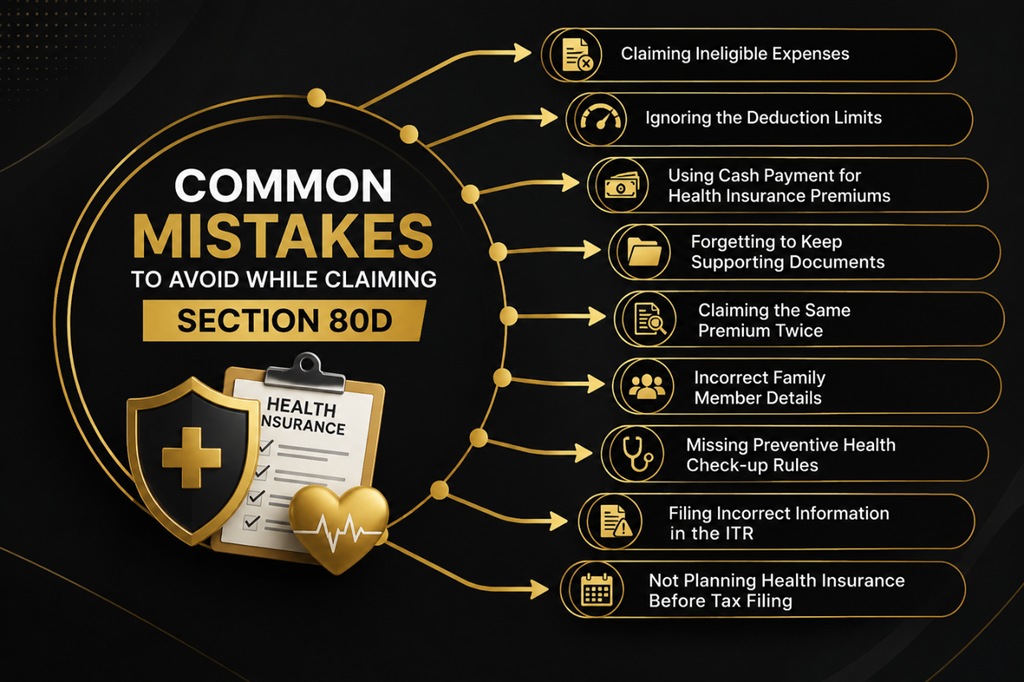
Frequently Asked Questions (FAQs) on Section 80D Tax Savings
Below are some of the most commonly asked questions about Section 80D and its tax-saving benefits.
1. What is Section 80D?
Section 80D of the Income Tax Act allows eligible taxpayers to claim tax deductions on health insurance premiums and certain healthcare-related expenses, subject to the prescribed conditions.
2. Who can claim a deduction under Section 80D?
The deduction can be claimed by:
- Individual taxpayers
- Hindu Undivided Families (HUFs)
3. Can I claim a deduction for my parents’ health insurance premium?
Yes. You can claim a separate deduction for the health insurance premium paid for your parents, whether they are financially dependent on you or not.
4. Is Section 80D available under the new tax regime?
No. The deduction under Section 80D is generally available only if you choose the old tax regime while filing your Income Tax Return.
5. What payment method should I use to claim the deduction?
Health insurance premiums should generally be paid through banking or digital payment modes. Cash payments for premiums are not eligible for deduction.
6. Are preventive health check-up expenses covered?
Yes. Preventive health check-up expenses qualify for deduction under Section 80D, subject to the applicable limits.
7. Can I claim both Section 80C and Section 80D together?
Yes. Since both sections cover different types of deductions, eligible taxpayers can claim benefits under both Section 80C and Section 80D, provided all conditions are satisfied.
8. Can I claim a deduction for a family floater health insurance policy?
Yes. Premiums paid for an eligible family floater health insurance policy can be claimed under Section 80D, subject to the prescribed deduction limits.
9. What documents should I keep while claiming Section 80D?
You should keep:
- Health insurance premium receipts
- Policy documents
- Payment proof
- Preventive health check-up bills (if applicable)
10. Why should I buy health insurance even if I want tax benefits?
The primary purpose of health insurance is to provide financial protection against medical expenses. The tax deduction under Section 80D is an additional benefit that helps reduce your taxable income while ensuring you and your family remain financially protected during medical emergencies.