

What Are Bonus Perks in Health Insurance?
Bonus perks in health insurance are additional benefits provided by insurers to reward policyholders for maintaining their health or not making claims during the policy period. These perks enhance the overall value of the policy by offering extra coverage, premium savings, or wellness-related benefits.
Common bonus perks include No Claim Bonus (NCB), increased sum insured, wellness rewards, preventive health check-ups, and discounts on healthcare services. These benefits help policyholders enjoy better financial protection without significantly increasing their premium.
Before choosing a health insurance plan, compare the bonus perks offered by different insurers to ensure you receive maximum long-term value and comprehensive healthcare coverage.
Types of Bonus Benefits Offered by Health Insurance Plans
Health insurance companies offer various bonus benefits to reward policyholders and enhance the value of their coverage. While these benefits vary across insurers, they are designed to provide additional financial protection and encourage healthy policy usage.
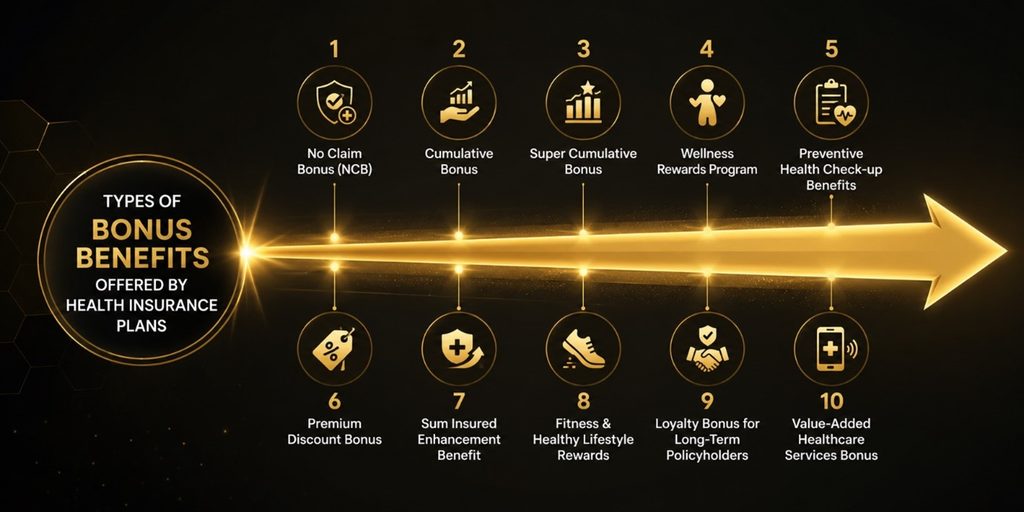
Understanding the different types of bonus benefits helps you compare health insurance plans more effectively and choose a policy that offers greater long-term value in addition to comprehensive medical coverage.
No Claim Bonus (NCB): How It Increases Your Health Insurance Benefits
A No Claim Bonus (NCB) is a reward offered by health insurance companies to policyholders who do not make any claims during a policy year. It enhances the value of your policy by either increasing the sum insured without an additional premium or, in some cases, providing premium-related benefits, depending on the insurer.
As you continue to enjoy claim-free years, the bonus may accumulate, giving you higher health coverage and better financial protection against future medical expenses. However, the bonus percentage, maximum limit, and its impact after making a claim vary from one insurer to another.
Before buying or renewing a health insurance policy, compare the NCB benefits offered by different insurers to maximize your long-term health insurance coverage.
Wellness Rewards & Fitness Benefits in Health Insurance
Many modern health insurance plans now include wellness rewards and fitness benefits to encourage policyholders to maintain a healthy lifestyle. Instead of only providing financial protection during illness, these programs reward healthy habits and preventive healthcare, adding more value to your insurance policy.
Wellness benefits may include rewards for regular exercise, achieving fitness goals, participating in health assessments, annual health check-ups, and using wellness apps or wearable devices. Some insurers also offer reward points, premium discounts, vouchers, or additional policy benefits for maintaining an active and healthy lifestyle.
These programs not only motivate policyholders to stay fit but also promote early detection of health issues through preventive care. By adopting healthier habits, individuals may reduce their risk of serious illnesses while enjoying extra benefits from their health insurance plan.
Before selecting a policy, compare the wellness and fitness benefits offered by different insurers, as the rewards, eligibility criteria, and program features vary from one company to another. Choosing a plan with strong wellness benefits can improve both your health and the overall value of your health insurance coverage.
Free Annual Health Check-ups: A Valuable Health Insurance Perk
Many health insurance plans offer free annual health check-ups as an additional benefit to encourage preventive healthcare. These check-ups allow policyholders to monitor their overall health regularly without incurring extra medical expenses. Unlike treatment-based benefits, preventive health check-ups focus on identifying potential health issues at an early stage, enabling timely medical intervention.
Depending on the insurer and policy, annual health check-ups may include basic diagnostic tests, blood tests, health screenings, and consultations with medical professionals. Some insurers provide this benefit every policy year, while others may offer it after completing a specified waiting period or at the time of policy renewal.
Regular health check-ups not only help in the early detection of diseases but also promote healthier lifestyle choices and better long-term health management. When comparing health insurance plans, it is worth checking the scope, frequency, and eligibility criteria of the free annual health check-up benefit, as these features vary among insurers. A policy with comprehensive preventive care benefits can provide greater value beyond hospitalization coverage.
Maternity & Newborn Coverage: Bonus Benefits You Should Know
Many health insurance plans offer maternity and newborn coverage as an additional benefit, helping families manage medical expenses related to pregnancy and childbirth. Depending on the policy, it may cover eligible hospitalization expenses for delivery and provide medical coverage for the newborn during the initial days after birth.
Since these benefits usually come with a waiting period and specific coverage limits, it is important to purchase the policy well before planning a family. Comparing maternity benefits across insurers can help you choose a plan that offers better financial protection for both the mother and the newborn.
Global Coverage & Emergency Medical Assistance as Premium Perks
Many premium health insurance plans include global coverage and emergency medical assistance as value-added benefits, offering financial protection beyond your home country. These perks are especially valuable for frequent travelers, expatriates, international students, and professionals who spend extended periods abroad.
Global coverage allows policyholders to receive eligible medical treatment in covered countries, subject to the policy terms and geographical limits. In addition, emergency medical assistance provides support during unexpected medical situations by offering services such as emergency hospitalization, medical evacuation, coordination with healthcare providers, and emergency travel assistance when required.
These premium benefits ensure that quality medical care remains accessible even when you are away from your home country, reducing financial stress during international medical emergencies. Before purchasing a policy, compare the scope of global coverage, eligible countries, emergency assistance services, exclusions, and policy conditions, as these features differ among insurers. Choosing a plan with comprehensive international benefits can provide greater peace of mind and stronger healthcare protection wherever you travel.
Cashless Hospitalization & Concierge Services: Exclusive Policy Benefits
Many premium health insurance plans offer cashless hospitalization and concierge services to make medical treatment more convenient. Cashless hospitalization allows eligible treatment at network hospitals without paying approved expenses upfront, as the insurer settles the bill directly with the hospital.
Concierge services provide additional support, such as hospital admission assistance, appointment scheduling, medical coordination, and claim guidance, helping policyholders manage the treatment process more smoothly. Before choosing a policy, compare the insurer’s network hospitals, concierge services, and policy terms to ensure you receive the best healthcare experience.
Restoration Benefits: How Your Sum Insured Gets Refilled Automatically
Restoration benefits are a valuable feature available in many health insurance plans that automatically restore your sum insured after it has been partially or fully exhausted due to an eligible claim. This ensures that you continue to have health insurance coverage for future medical emergencies during the same policy year, subject to the policy terms and conditions.
For example, if your entire sum insured is used for one hospitalization, the insurer may automatically reinstate the coverage so it is available for another eligible claim. This benefit is particularly useful in cases of multiple hospitalizations or when more than one family member is covered under a family floater policy.
However, restoration benefits vary across insurers. Some policies restore the sum insured only once during a policy year, while others may offer unlimited restoration for eligible claims. The conditions, exclusions, and applicability also differ from one policy to another.
Before purchasing a health insurance plan, review the restoration benefit carefully to understand when the sum insured is reinstated and the situations in which it can be used. A policy with a strong restoration feature can provide greater financial security during unexpected medical emergencies.
Loyalty Rewards & Renewal Benefits in Health Insurance Plans
Many health insurance companies reward long-term policyholders through loyalty rewards and renewal benefits, making continued coverage more valuable over time. These benefits are designed to encourage uninterrupted policy renewals while providing additional financial and healthcare advantages.
Depending on the insurer, loyalty rewards may include enhanced coverage, increased sum insured, wellness benefits, reduced waiting periods, premium-related benefits, or access to exclusive healthcare services. Some insurers also offer additional value-added features for customers who renew their policies consistently without breaks.
Renewing your health insurance policy on time not only helps you retain these benefits but also ensures continuous coverage without losing accumulated advantages such as No Claim Bonus or restoration benefits. Since loyalty rewards and renewal benefits differ across insurers, it is advisable to compare these features before choosing a health insurance plan. A policy with strong long-term benefits can provide greater value and better financial protection over the years.
How to Compare Health Insurance Plans Based on Bonus Perks
Choosing a health insurance plan is not just about comparing premiums. Evaluating the bonus perks offered by different insurers can help you get better long-term value. Here are the key factors to compare:
No Claim Bonus (NCB)
Compare how much the sum insured increases after each claim-free year and the maximum bonus allowed.
Cumulative Bonus
Check whether the insurer offers cumulative bonus benefits and how they accumulate over multiple policy years.
Restoration Benefit
See if the policy automatically restores the sum insured after an eligible claim and understand the restoration conditions.
Wellness Rewards
Compare wellness programs, fitness rewards, and health incentive benefits provided by different insurers.
Free Annual Health Check-ups
Review the frequency, eligibility, and scope of preventive health check-ups included in the policy.
Premium Discount Benefits
Check whether the insurer offers premium discounts or renewal-related rewards for maintaining a healthy claim history.
Value-Added Healthcare Services
Compare additional services such as telemedicine, pharmacy discounts, health coaching, and digital healthcare support.
Maternity & Family Benefits
If relevant, compare maternity coverage, newborn benefits, and family-focused bonus features.
Loyalty & Renewal Rewards
Review the additional benefits available for long-term policyholders who renew their policies without interruption.
Eligibility & Policy Conditions
Always compare the waiting periods, exclusions, eligibility criteria, and limitations attached to each bonus perk before making your final decision.
Conclusion
Bonus perks can significantly enhance the overall value of a health insurance policy by offering benefits beyond basic hospitalization coverage. Features such as No Claim Bonus, restoration benefits, wellness rewards, free annual health check-ups, loyalty rewards, and global coverage can improve both your financial protection and healthcare experience. While comparing health insurance plans, it is important to evaluate these additional benefits along with the premium, coverage, exclusions, and claim process. Choosing a policy with the right bonus perks ensures better long-term value and more comprehensive health protection for you and your family.
Frequently Asked Questions (FAQs)
1. What are bonus perks in health insurance?
Bonus perks are additional benefits offered by insurers, such as No Claim Bonus, wellness rewards, restoration benefits, and free health check-ups, that enhance the value of your policy.
2. Is No Claim Bonus available in every health insurance plan?
Most health insurance plans offer a No Claim Bonus, but the percentage, maximum limit, and conditions vary across insurers.
3. What is a restoration benefit?
A restoration benefit automatically reinstates your sum insured after it has been partially or fully exhausted due to an eligible claim, subject to the policy terms.
4. Do wellness rewards reduce my insurance premium?
Some insurers offer reward points, vouchers, or premium-related benefits through wellness programs, depending on the policy.
5. Are free annual health check-ups included in all policies?
No. The availability and frequency of free health check-ups differ from one insurer and policy to another.
6. Can bonus perks increase my sum insured?
Yes. Benefits such as No Claim Bonus and cumulative bonus can increase your sum insured without requiring an additional premium, depending on the policy.
7. Are bonus perks available immediately after buying a policy?
Some benefits are available from the start, while others may require policy renewal, a claim-free year, or completion of a waiting period.
8. Do bonus perks remain after making a claim?
This depends on the insurer. Some bonus benefits may reduce or reset after a claim, while others may continue as per the policy conditions.
9. How do I compare bonus perks across different health insurance plans?
Compare features such as No Claim Bonus, restoration benefits, wellness rewards, health check-ups, loyalty benefits, and policy conditions to identify the plan offering the best long-term value.
10. Why should I consider bonus perks while choosing health insurance?
Bonus perks enhance your coverage, improve financial protection, and provide additional healthcare benefits, making your health insurance policy more valuable over time.