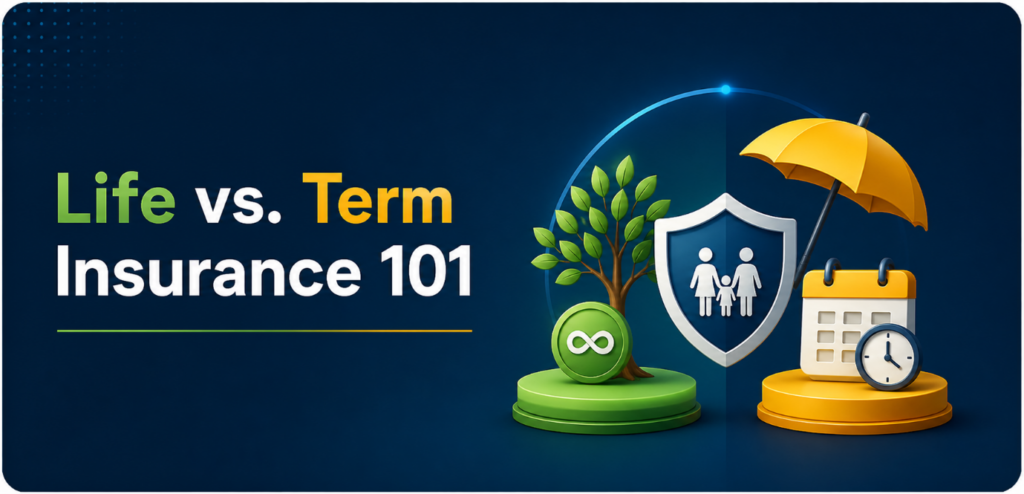

Understanding Term Plans
Term Insurance is a type of life insurance that provides financial protection to an individual’s family for a specific period of time, known as the “term.” It is designed to offer a high amount of life cover at an affordable cost. If the insured person passes away during this policy term, the insurance company pays a fixed amount, called the sum assured, to the nominee or beneficiary.
This form of insurance focuses purely on protection and include any savings or investment component. . Its primary purpose is to ensure that the policyholder’s dependents are financially secure in case of an unexpected event.
The coverage duration can vary and is usually chosen by the policyholder based on their financial responsibilities, such as income replacement, liabilities, or long-term obligations. The policy remains active as long as the premiums are paid regularly within the selected term.
Term insurance is considered one of the simplest and most essential financial tools for risk management, as it helps safeguard the financial future of dependents by providing a substantial payout in case of the policyholder’s death during the policy period.
How Term Insurance Functions
Policy Purchase
The individual selects the coverage amount (sum assured), policy term, and premium payment frequency.
Premium Payment
The policyholder pays a fixed premium regularly (monthly, quarterly, or yearly) to keep the policy active.
Policy Activation
Once the first premium is paid and the policy is issued, life coverage begins for the chosen term.
Risk Coverage Period
The insurance company provides financial protection throughout the policy term as long as premiums are paid on time.
In Case of Death
If the policyholder passes away during the policy term, the insurer pays the sum assured to the nominee.
Survival Till Maturity
If the policyholder survives the entire term, no payout is made in most standard term plans, and the policy ends.
Fixed Premium Structure
The premium amount is generally fixed at the start and remains unchanged throughout the policy term.
Policy Lapse Condition (1month)
If premiums are not paid within the grace period, the policy may lapse, and coverage will stop.
Claim Process
The nominee files a claim with required documents, after which the insurer processes and pays the claim if valid.
Optional Add-ons (Riders)
Policyholders can enhance coverage by adding riders like critical illness or accidental death benefits at an extra cost.
Key Highlights of Term Insurance
| Aspect | Feature |
| Entry Age | Minimum is 18 years, and maximum usually up to 65 years |
| Maturity Age | Generally ranges from 65 to 85 years; some plans extend up to 99 or 100 years |
| Coverage Type | Pure life risk coverage with/without savings or investment component |
| Premium Cost | Affordable premiums for high sum assured |
| Premium Payment Mode | Annual, half-yearly, quarterly, and monthly |
| Premium Paying Term | 5, 10, 12, 15, pay till age of 60 and full policy term |
| Policy Term | Flexible duration such as 60,65,70, maximum till age of 85 |
| Death Benefit | Sum assured is paid to the nominee in case of death during the term |
| Maturity Benefit | No payout on survival in most basic plans |
| Riders Available | Options like critical illness, accidental death, and disability cover |
| Tax Benefits | Premiums and benefits may be eligible for tax benefits as per laws |
Please note that features and eligibility can differ depending on the plan.
Advantages of Term Insurance
High Life Coverage at Low Cost
Term insurance provides a large coverage amount at a much lower premium compared to other life insurance plans. This makes it easier for individuals to secure their family’s financial future without putting a heavy burden on their current income or budget.
Financial Security for Family
In case of the policyholder’s death, the nominee receives a lump sum payout. This amount helps the family manage daily expenses, household needs, and future financial goals without facing immediate financial stress or dependency on others.
Income Replacement
The sum assured acts as a replacement for the policyholder’s income. It ensures that the family can continue their lifestyle, pay bills, and meet long-term commitments even when the primary earning member is no longer there.
Flexible Policy Terms
Term insurance allows you to choose the duration of coverage based on your needs. Whether it is until retirement or until major responsibilities are fulfilled, you can select a term that aligns with your financial planning goals.
Simple and Easy to Understand
This type of insurance is straightforward, as it focuses only on life protection. There are no complex investment components, making it easy for beginners to understand how it works and what benefits they will receive.
Rider Options for Extra Protection
Policyholders can enhance their coverage by adding riders such as critical illness, accidental death, or disability benefits. These additions provide extra financial support in specific situations beyond basic life coverage.
Customizable Coverage
You can choose the sum assured, policy term, and premium payment options based on your income and responsibilities. This flexibility helps in designing a plan that suits your financial condition and future goals.
Long-Term Protection
Term insurance provides coverage for a long period, often up to retirement age. It ensures that your family is protected during the years when financial responsibilities and risks are at their highest.
Tax Benefits
Premiums paid for term insurance are eligible for deduction up to ₹1.5 lakh per year under Section 80C of the Income Tax Act. The death benefit received by the nominee is fully tax-free under Section 10(10D), provided the premium does not exceed 10% of the sum assured.
Types of Term Insurance
- Increasing Term Insurance
The coverage amount increases over time, usually at a fixed rate. This helps to manage rising expenses and inflation over the years. - Decreasing Term Insurance
The sum assured reduces gradually during the policy term. It is commonly used to cover liabilities like loans, where the outstanding amount decreases over time. - Return of Premium Term Insurance (TROP)
In this plan, if the policyholder survives the term, all the premiums paid (excluding taxes and charges) are returned at maturity. - Convertible Term Insurance
This type allows the policyholder to convert the term plan into another type of life insurance plan (such as whole life or endowment) at a later stage without medical re-evaluation. - Renewable Term Insurance
The policy can be renewed after the end of the term without undergoing a medical check-up, although the premium may increase based on age. - Group Term Insurance
This is offered to a group of people, such as employees of a company. It provides life cover to all members under a single policy. - Online Term Insurance
These policies are purchased online, usually at lower premiums due to reduced administrative costs.
Each type of term insurance is designed to meet different financial needs, allowing individuals to choose a plan that best fits their life stage and responsibilities.
What is Covered and Not Covered in Term Insurance
| Inclusions (Covered) | Exclusions (Not Covered) |
| Death due to natural causes | Suicide within initial period |
| Death due to accidents | Self-inflicted injuries |
| Terminal illness (if included) | Death during illegal activities |
| Critical illness (with rider) | High-risk activities (if not covered) |
| Accidental death benefit (rider) | War or terrorism-related events |
| Disability benefits (rider) | Non-disclosure of important information |
| Premium waiver benefit | Death due to drugs or alcohol abuse |
Quick Understanding
- Inclusions = Situations where the insurance company will pay the claim
- Exclusions = Situations where the insurance company can reject the claim
How much life cover is sufficient for me?
Choosing the right term insurance cover is important because it should be sufficient to financially protect your family in your absence. The coverage amount should be based on your income, expenses, liabilities, and future financial goals.
1. Based on Income (Basic Rule)
A commonly used approach is to take a cover that is 10 to 15 times your annual income. This ensures your family can maintain their lifestyle for several years even without your income.
2. Consider Your Financial Responsibilities
Your term cover should include: (DIME)
- Debt Except Home( loans, personal loan, etc.)
- Income
- Mortgage
- Education & Expenses.
The idea is to make sure all major financial obligations are taken care of.
3. Include Future Goals
Think about long-term needs such as:
- Higher education for children
- Marriage expenses
- Retirement support for your spouse
Your coverage should be enough to handle these future costs comfortably.
4. Subtract Existing Assets
If you already have investments or savings (like fixed deposits, mutual funds, or other assets), you can subtract their value from the total required cover. This avoids over-insurance.
5. Factor in Inflation
Expenses will increase over time, so your coverage should be high enough to adjust for rising costs in the future.
6. Consider Your Life Stage
- Younger individuals may need higher coverage for longer duration
- Married individuals with children need higher protection
- People with fewer dependents may need relatively lower cover
7. Use a Structured Approach (HLV Concept)
A more detailed method is the Human Life Value (HLV) approach, which calculates your economic worth based on:
- Current income
- Expected future earnings
- Expenses and liabilities
- Number of earning years left
In simple terms:
Your term insurance cover should be large enough to replace your income, clear all debts, and secure your family’s future goals without financial stress.
How can I calculate my Term Insurance Premium?
Term insurance premium is the amount you pay to the insurance company to keep your policy active. It is not calculated manually by a fixed formula, but it depends on multiple personal and policy-related factors.
Key Factors That Decide Your Premium
Age
Premium depends heavily on your age. The younger you are when you buy the policy, the lower the premium. As age increases, the risk of health issues rises, leading to higher premium costs.
Sum Assured (Coverage Amount)
The higher the coverage amount you choose, the higher your premium will be. This is because the insurer is taking on a larger financial risk by promising a bigger payout.
Policy Term (Duration)
Longer policy terms may slightly increase the premium since the insurer covers you for a longer period. However, locking in early can keep premiums stable for many years.
Health Condition
Your current health and medical history play a major role. Pre-existing diseases or poor health increase risk, which leads to higher premiums or sometimes stricter policy terms.
Lifestyle Habits
Habits like smoking, alcohol consumption, or risky activities raise the chances of health issues. Insurers charge higher premiums to compensate for the increased risk involved.
Occupation
If your job involves physical danger or high risk, such as working in hazardous environments, your premium may be higher due to the increased likelihood of accidents.
Gender
Premiums may vary based on gender, as life expectancy differs statistically For Women’s there is some discounts..
In simple terms:
Your term insurance premium is based on how much risk the insurer is taking to cover your life. Lower risk means lower premium, and higher coverage or risk leads to a higher premium.
Who Should Opt for Term Insurance?
Term insurance is suitable for anyone who wants to financially protect their dependents. It is especially important for individuals who have responsibilities and people depending on their income.
1. Primary Earners of the Family
Individuals who are the main source of income should have term insurance to ensure their family remains financially secure in their absence.
2. Parents with Children
If you have children, term insurance becomes essential to secure their education, lifestyle, and future goals.
3. Individuals with Loans or Liabilities
People with home loans, personal loans, or other debts should have term insurance so that these liabilities do not become a burden on their family.
4. Young Professionals
Starting early helps lock in lower premiums for a longer duration. It also ensures long-term financial protection at an affordable cost.
5. Self-Employed Individuals
Those without a fixed income or employer-provided benefits should consider term insurance to create a financial safety net for their family.
6. Business Owners
Entrepreneurs should have term insurance to protect their family and ensure business-related financial obligations are managed.
In simple terms:
Anyone who has financial responsibilities or dependents should buy term insurance to ensure their loved ones are financially protected in case of an unexpected event.
Things You Should Check Before Getting Term Insurance
Before selecting a term insurance plan, it is important to assess key aspects that broadly fall into two categories: your personal financial needs and the policy’s overall structure. Making an informed decision ensures long-term financial protection without unnecessary complications.
How to Select the Right Term Insurance Provider
Choosing the right insurer is as important as choosing the right coverage. A reliable company ensures your family does not face difficulties during claim settlement. Consider the following parameters:
- Claim Consistency Record:
Check the insurer’s claim settlement performance over multiple years, not just one year. Consistent records indicate reliability and higher chances of smooth claim approval. - Financial Strength of the Insurer:
Choose a company with strong financial reserves and stability, ensuring it can handle large claims and remain dependable in the long run. - Turnaround Time for Claims:
Faster claim processing reflects efficient systems and ensures your family receives financial support without unnecessary delays. - Transparency in Communication:
A good insurer clearly explains policy terms, charges, and conditions, reducing the risk of misunderstandings during claim time. - Customer Support Accessibility:
Easy access to support through calls, online platforms, or branches ensures quick assistance when needed, especially during critical situations.
How to Choose the Right Term Insurance Policy
Selecting the right policy requires aligning the plan with your long-term financial responsibilities and risk profile.
- Adequate Coverage Planning:
Ensure your coverage is enough to replace income, clear debts, and support future goals so your family remains financially stable even in your absence. - Duration Alignment:
Choose a policy term that covers your working years and major responsibilities, ensuring protection until your financial obligations are fully met. - Premium Stability:
Opt for a plan with fixed and predictable premiums so it remains affordable and does not create financial pressure over time. - Customisation Options:
Select a policy that allows flexibility to add riders, increase coverage, or adjust features as your financial needs change. - Clarity of Policy Terms:
Carefully review all terms, conditions, inclusions, and exclusions to avoid confusion or claim rejection in the future. - Value Over Cost:
Focus on overall benefits, claim reliability, and coverage instead of just choosing the cheapest premium option.
How to Buy Term Insurance Online?
Now that you understand what term insurance is and how it works, take a look at the simple step-by-step guide below to learn how you can easily purchase a term insurance plan online in a quick and hassle-free way:
- Calculate Your Coverage Needs
Assess your income, expenses, liabilities, and future goals to decide the right sum assured (DIME). - Compare Plans Online
Research and compare multiple plans based on premium, features, claim ratio, and reviews. - Choose the Right Plan
Select a plan that suits your needs, budget, and provides the right coverage and benefits. - Fill in the Online Application
Enter your personal, professional, and nominee details accurately in the proposal form. - Choose Add-ons (Riders)
Add optional riders like critical illness, accidental cover, or waiver of premium if required. - Upload Required Documents
Submit scanned copies of KYC documents, address proof, income proof, and other required files. - Complete Medical Check-up
Undergo a medical examination if required (many insurers offer home sample collection). - Review & Make Payment
Carefully review all details and complete the payment through an online mode. - Policy Issued Digitally
Once verified, the policy is issued digitally and sent via email/SMS.
✅ Final Outcome:
- You’re protected and your family’s financial future is secured.
Point to be Noted:
When you apply for a term insurance plan, approval is not always guaranteed. The outcome may include approval, rejection, postponement, or even a modified offer such as increased premium or reduced coverage, depending on the insurer’s underwriting assessment.
At Spiel Wealth, we always advise applicants to maintain full transparency and ensure all documents and personal details are accurate and updated. Proper disclosures and correct paperwork play a crucial role in improving the chances of a smooth policy approval without complications.
Why Choose Spiel Wealth for Term Insurance?
Spiel Wealth helps you choose the right term insurance plan based on your needs, income, and goals. It focuses on simple guidance, transparent advice, and comparing multiple options so you can get the best coverage at the right price.
It ensures you understand every detail clearly, avoid confusion, and select a plan that truly protects your family’s financial future.