What is Payment Protection in Insurance?
Payment protection in insurance is a financial safety feature that helps individuals continue managing important payments during unexpected situations such as illness, disability, job loss, or loss of income. It is designed to reduce financial stress by providing support for regular financial obligations when the policyholder faces difficulties in earning or making payments.
This type of protection can help cover expenses such as loan EMIs, credit card bills, household costs, or other financial commitments for a specified period, depending on the policy terms. Payment protection plans are commonly used with loans, insurance policies, or income protection coverage to maintain financial stability during emergencies.
Having payment protection helps individuals avoid financial disruption and ensures that essential payments continue even during challenging situations. It acts as an additional layer of financial security and supports better long-term financial planning.
Importance of Payment Protection Plans
Payment protection plans play an important role in maintaining financial stability during unexpected situations such as illness, disability, job loss, or temporary income interruption. These plans help individuals continue managing essential financial commitments even when regular income is affected.
One of the biggest advantages of payment protection is that it helps cover important expenses such as loan EMIs, credit card payments, household bills, and other regular obligations. This reduces financial pressure on the individual and family during difficult times.
Payment protection also supports long-term financial planning by preventing missed payments, penalties, or debt accumulation. Having this additional financial support provides peace of mind and helps individuals handle emergencies with greater financial confidence.
How Payment Protection Works
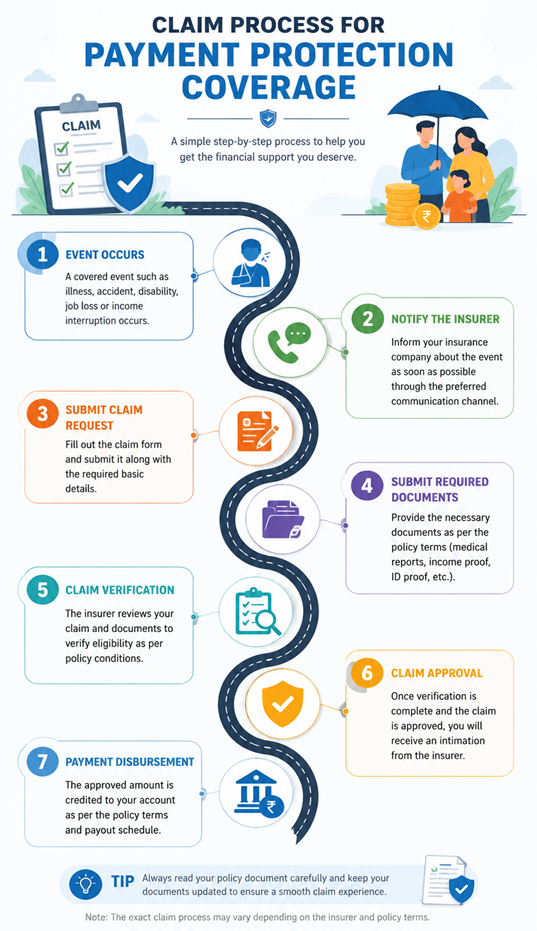
Payment protection provides financial support when a policyholder faces situations like illness, disability, accident, or job loss and is unable to manage regular payments.
- Policy Purchase – The individual buys a payment protection plan along with insurance or loan coverage.
- Unexpected Situation Occurs – Coverage activates during events like illness, disability, or income loss.
- Claim Submission – The policyholder submits required documents and claim details to the insurer.
- Claim Verification – The insurance company reviews policy conditions and verifies eligibility.
- Financial Support Provided – After approval, the insurer provides payment support as per policy terms.
- Covers Regular Expenses – The benefit may help manage loan EMIs, bills, or household expenses.
- Temporary Protection – Support is generally provided for a limited period mentioned in the policy.
- Maintains Financial Stability – Helps reduce financial stress during difficult situations.
Types of Payment Protection Coverage
Payment protection coverage comes in different forms to provide financial support during unexpected situations that affect income or repayment ability. Each type is designed to protect specific financial responsibilities and help maintain stability during difficult times.
- Loan Payment Protection – Helps cover loan EMIs during illness, disability, or income interruption.
- Credit Card Payment Protection – Assists in managing outstanding credit card payments during emergencies.
- Income Protection Coverage – Provides financial support when the policyholder is unable to earn regular income.
- Disability Payment Protection – Offers payment assistance if a disability affects the ability to work.
- Job Loss Protection – Supports essential payments during temporary unemployment or involuntary job loss.
- Mortgage Protection Coverage – Helps manage home loan payments and protects property ownership.
- Accident-Based Payment Protection – Provides financial help if accidents impact earning capacity or repayment ability.
These coverage options help individuals reduce financial stress and continue managing important financial commitments during uncertain situations.
Benefits of Payment Protection Riders
Payment protection riders provide additional financial security by helping individuals manage important expenses during unexpected situations such as illness, disability, accident, or income loss. These riders act as extra support alongside the main insurance policy and help reduce financial pressure during difficult times.
One of the major benefits of payment protection riders is that they help continue essential payments such as loan EMIs, credit card bills, and household expenses when regular income is affected. This support helps maintain financial stability and prevents missed payments or debt accumulation.
Payment protection riders also improve overall financial planning by offering temporary financial assistance during emergencies. They provide peace of mind and ensure that important financial responsibilities can still be managed without disturbing long-term savings or investments.
Who Should Buy Payment Protection Coverage?
Payment protection coverage is suitable for individuals who have regular financial responsibilities and want extra security during unexpected situations that may affect their income. It is especially useful for people who depend on a steady income to manage loans, household expenses, or other financial commitments.
Individuals with home loans, personal loans, credit card obligations, or monthly EMI payments can benefit from this coverage because it helps continue payments during illness, disability, accident, or temporary job loss. Business owners, salaried employees, and self-employed individuals may also consider payment protection to reduce financial stress during uncertain situations.
Choosing payment protection coverage can help maintain financial stability and prevent disruptions in important payments, making it a valuable part of overall financial planning.
Waiting Period in Payment Protection Policies
The waiting period in payment protection policies refers to the specific time after purchasing the policy during which claim benefits may not be available. This period is set by the insurer and helps prevent immediate claims soon after policy activation.
In many payment protection plans, the waiting period can range from 30 to 90 days, depending on the type of coverage and insurer guidelines. If an event such as job loss, illness, or disability occurs during this period, the claim may not be eligible for payment protection benefits.
Understanding the waiting period is important because coverage becomes fully active only after this duration ends. Reviewing policy terms carefully helps individuals avoid confusion and make better financial decisions while choosing payment protection coverage.
Factors to Consider Before Choosing Payment Protection
Choosing the right payment protection coverage requires careful understanding of personal financial responsibilities and policy features. Before selecting a plan, it is important to check what situations are covered, such as illness, disability, accident, or job loss, and understand the conditions attached to the coverage.
Individuals should also review important factors like waiting period, payout duration, exclusions, claim process, and premium cost. The coverage should be sufficient to manage major financial commitments such as loan EMIs, household expenses, or credit obligations during emergencies.
Another important consideration is the insurer’s reputation and claim settlement support, as reliable financial assistance becomes essential during difficult situations. Comparing different plans and understanding policy terms carefully helps in choosing payment protection that provides effective long-term financial security.
Payment Protection vs Emergency Savings
| Aspect | Payment Protection | Emergency Savings |
| Meaning | Insurance-based financial support during income loss or emergencies | Personal savings kept aside for unexpected expenses |
| Main Purpose | Helps continue important payments during difficult situations | Provides immediate financial backup for emergencies |
| Financial Support | Offered by the insurer as per policy terms | Self-funded from personal savings |
| Coverage Period | Usually available for a limited time mentioned in the policy | Can be used anytime until savings are exhausted |
| Suitable For | Loan EMIs, bills, and income interruption protection | Medical expenses, urgent repairs, or short-term emergencies |
| Monthly Cost | Requires premium payment | Requires regular saving discipline |
| Risk Protection | Helps reduce financial burden during specific covered events | Depends completely on available savings amount |
| Flexibility | Benefits depend on policy conditions and exclusions | Full control over usage of funds |
| Financial Security | Provides structured protection during emergencies | Offers quick access to personal emergency funds |
| Best Use | Long-term financial protection support | Immediate emergency expense management |
Cost of Payment Protection Plans
The cost of payment protection plans depends on several factors such as the type of coverage, policy duration, age of the policyholder, occupation, income level, and overall risk profile. Plans that provide broader protection or higher benefit amounts generally come with higher premium costs.
Individuals with stable income and lower health or job-related risks may receive more affordable premium rates. On the other hand, factors such as high-risk occupations or larger financial liabilities can increase the cost of coverage.
Although payment protection plans add an extra expense through premium payments, they can provide valuable financial support during emergencies like illness, disability, or job loss. Choosing a suitable plan based on financial needs and affordability helps create better long-term financial security.
Common Mistakes While Buying Payment Protection
Many people buy payment protection without fully understanding how it works, which can lead to issues during financial emergencies. One common mistake is choosing a plan only based on low premium cost without checking the actual coverage and benefits offered. This can result in insufficient financial support when it is most needed.
Another mistake is not reading important policy terms such as waiting period, exclusions, claim conditions, and payout limits. Ignoring these details may lead to claim rejection or confusion during the claim process.
Some buyers also fail to match the coverage with their actual financial needs, such as loan EMIs, credit card payments, or monthly expenses. Incomplete disclosure of financial or employment details can also affect claim approval.
Carefully comparing different plans, understanding policy conditions, and choosing coverage based on real financial responsibilities helps avoid these mistakes and ensures better financial protection.
Final Takeaway: Why Payment Protection Matters
Payment protection is an important part of financial planning because it helps individuals manage essential expenses during unexpected situations like job loss, illness, disability, or income interruption. It ensures that important payments such as loan EMIs, credit card bills, and household expenses continue without major financial stress.
This type of protection reduces the risk of missed payments, debt buildup, and financial instability during emergencies. It also provides peace of mind by acting as a safety net when regular income is affected.
In simple terms, payment protection matters because it supports financial stability, protects long-term planning, and helps individuals handle uncertain situations with greater confidence and security.